Rose Arbuthnott
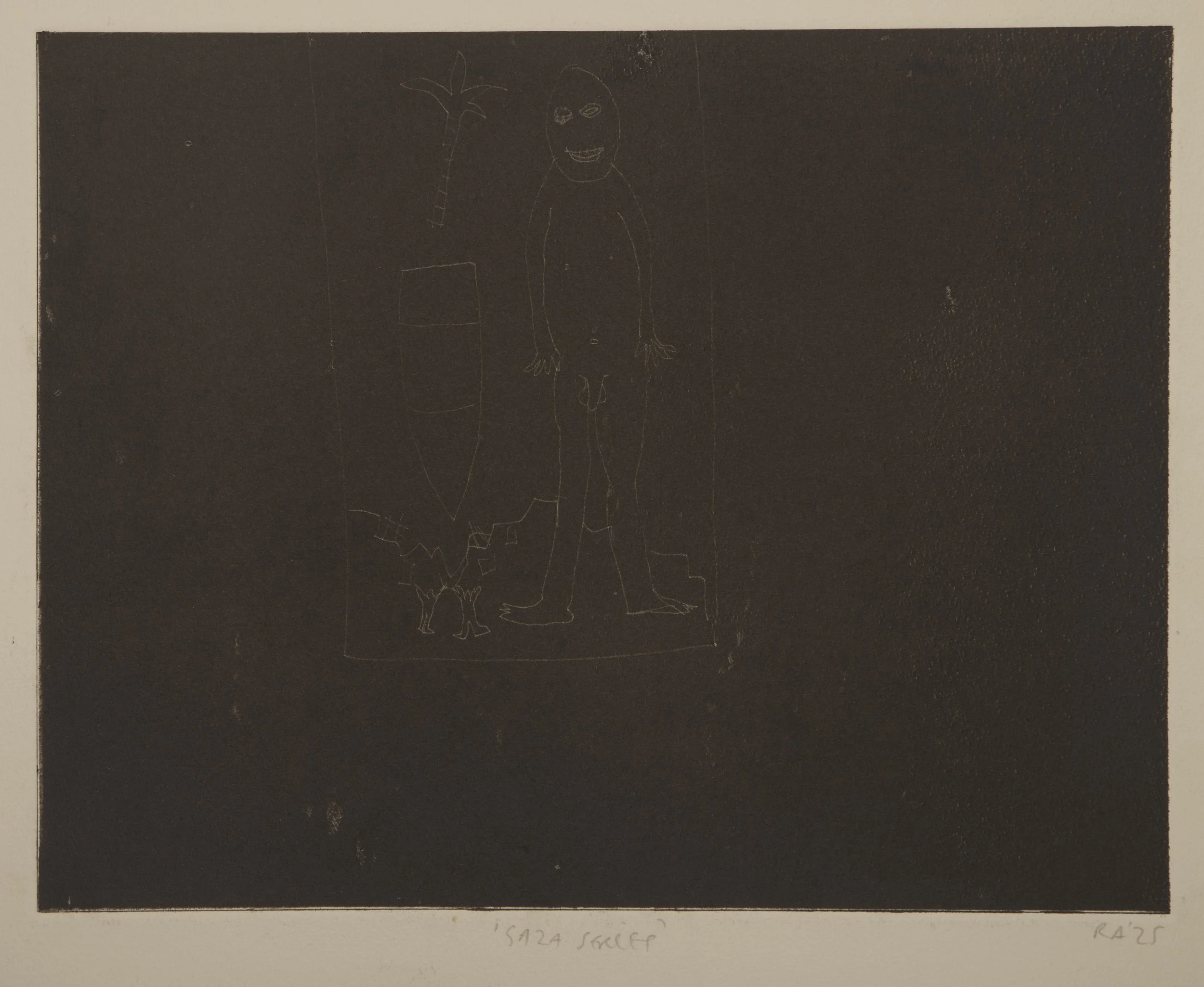
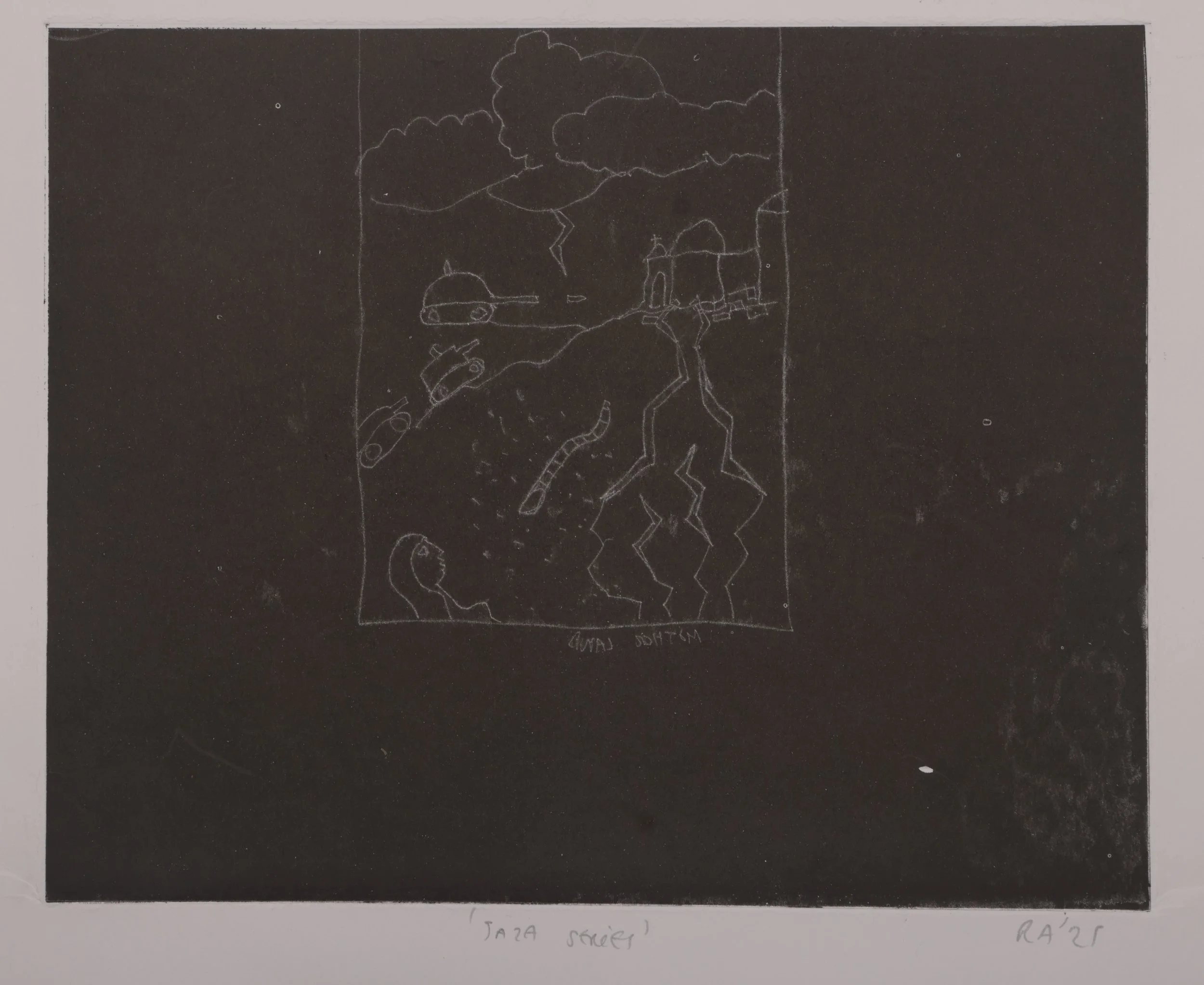
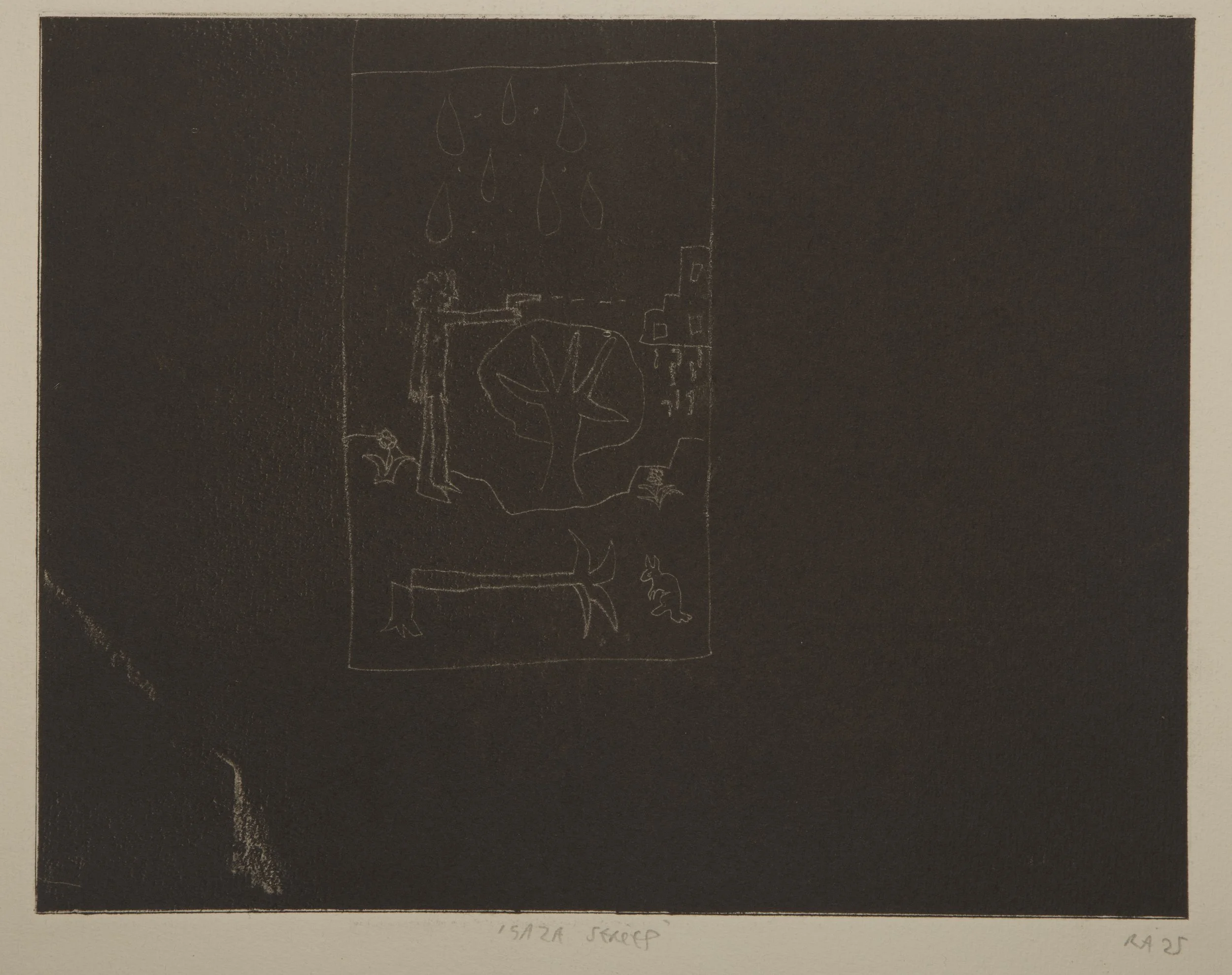
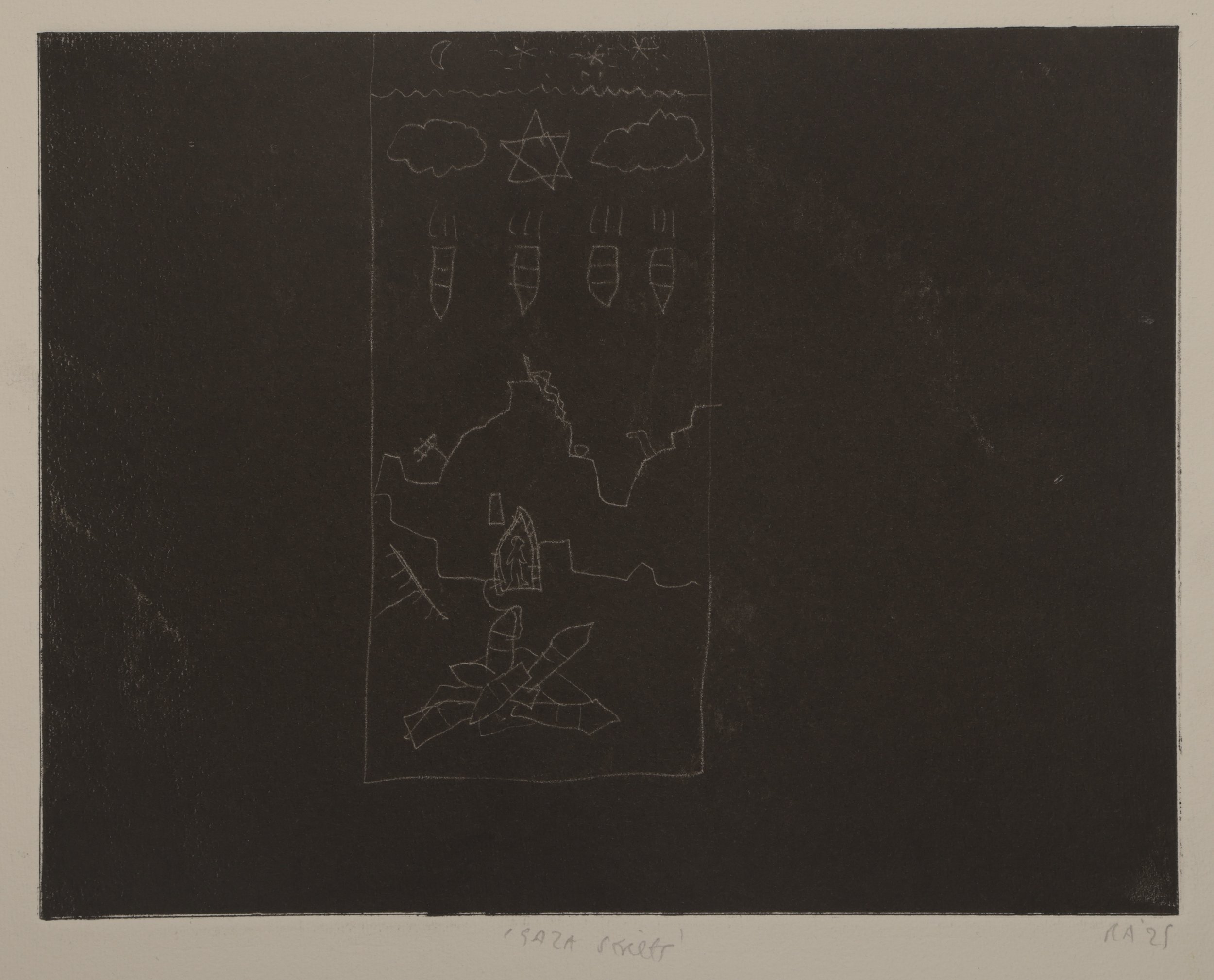
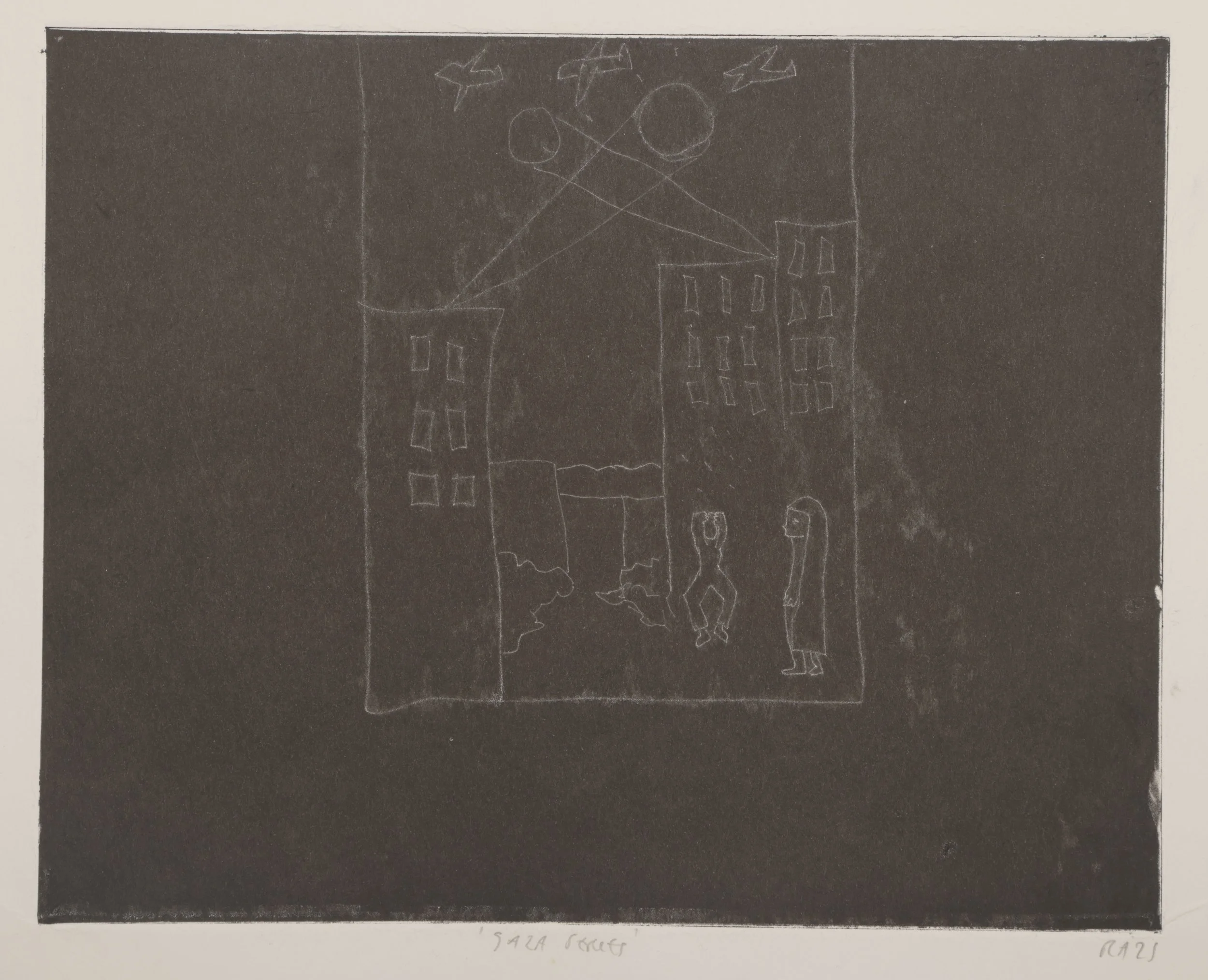
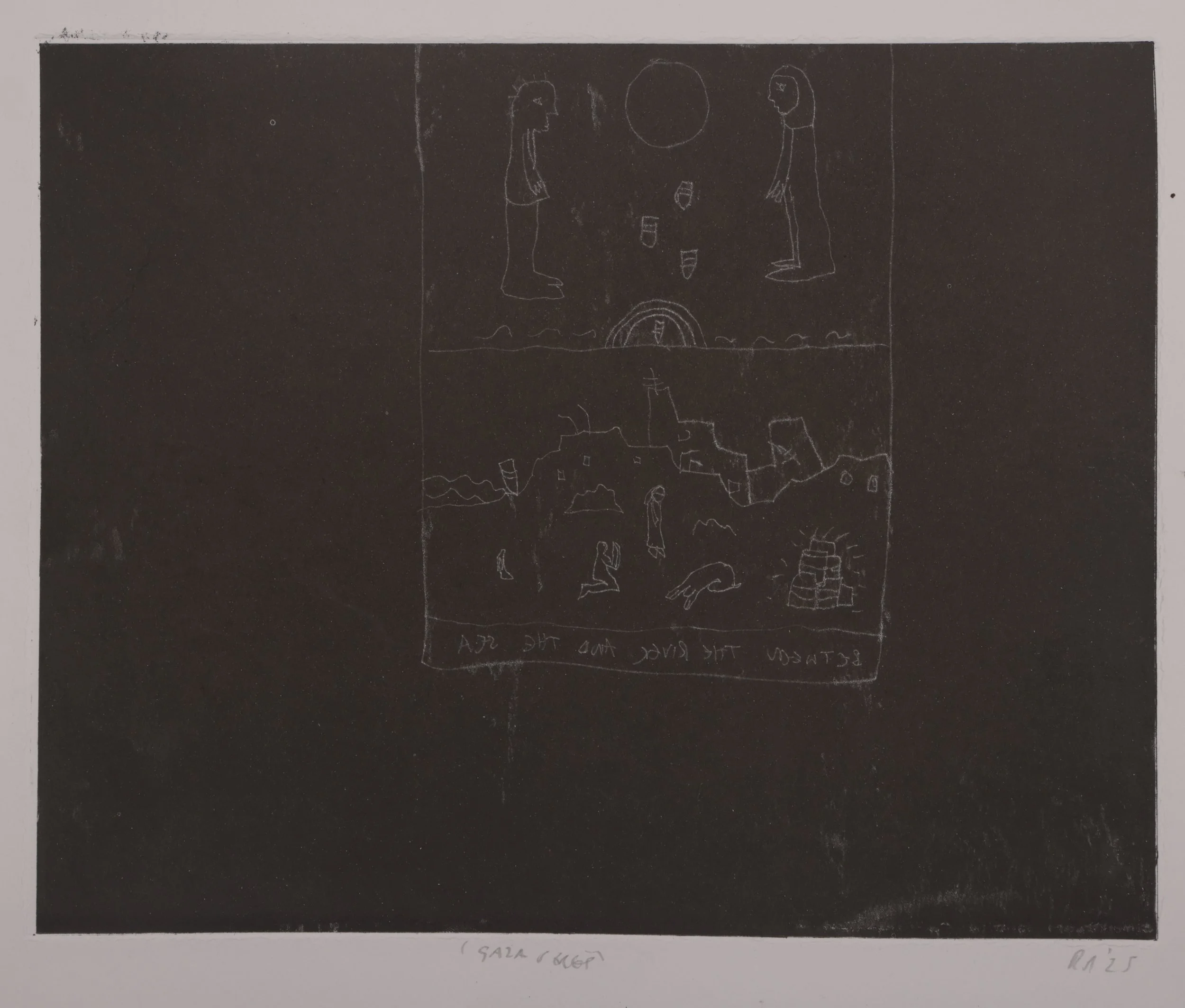
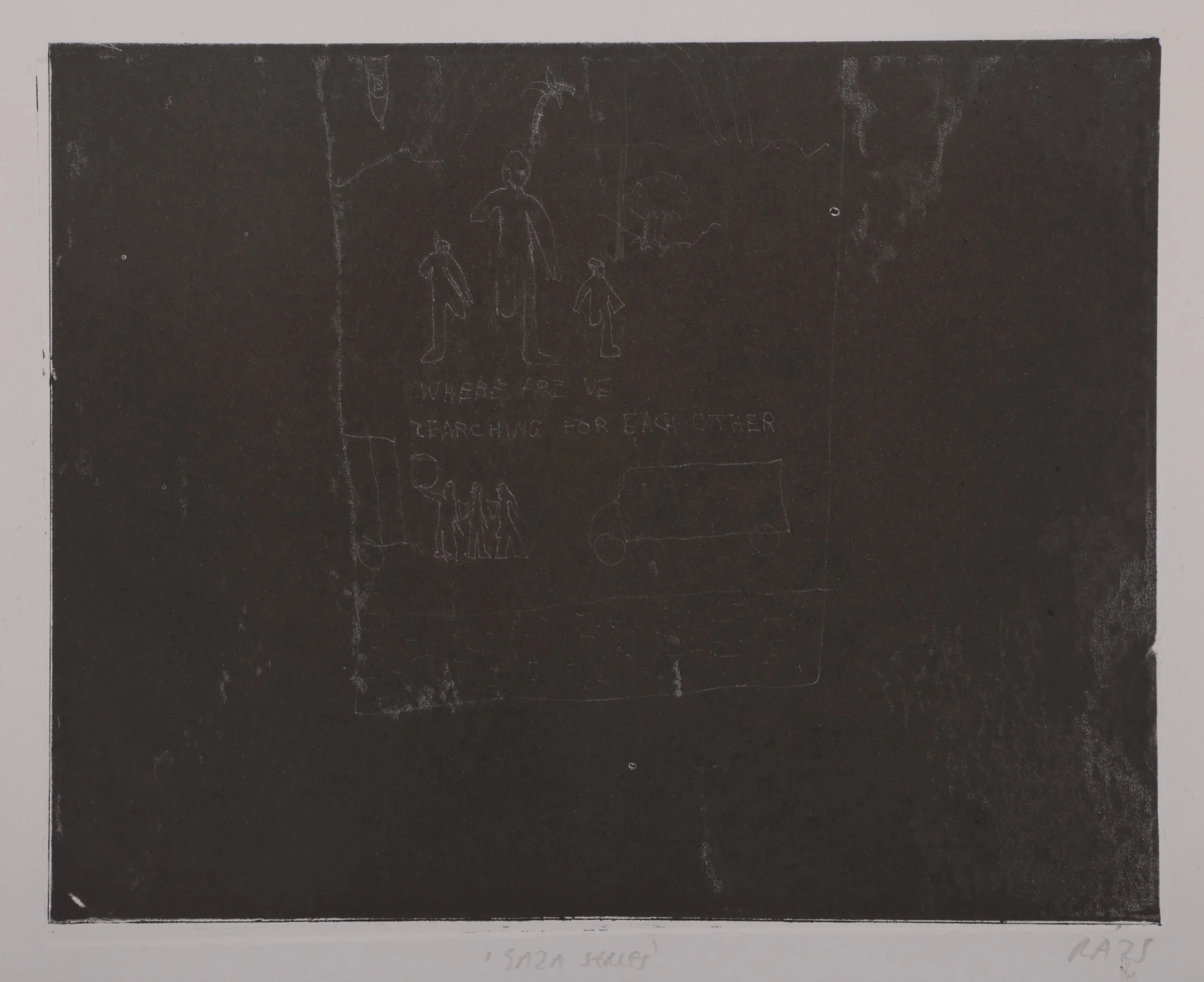
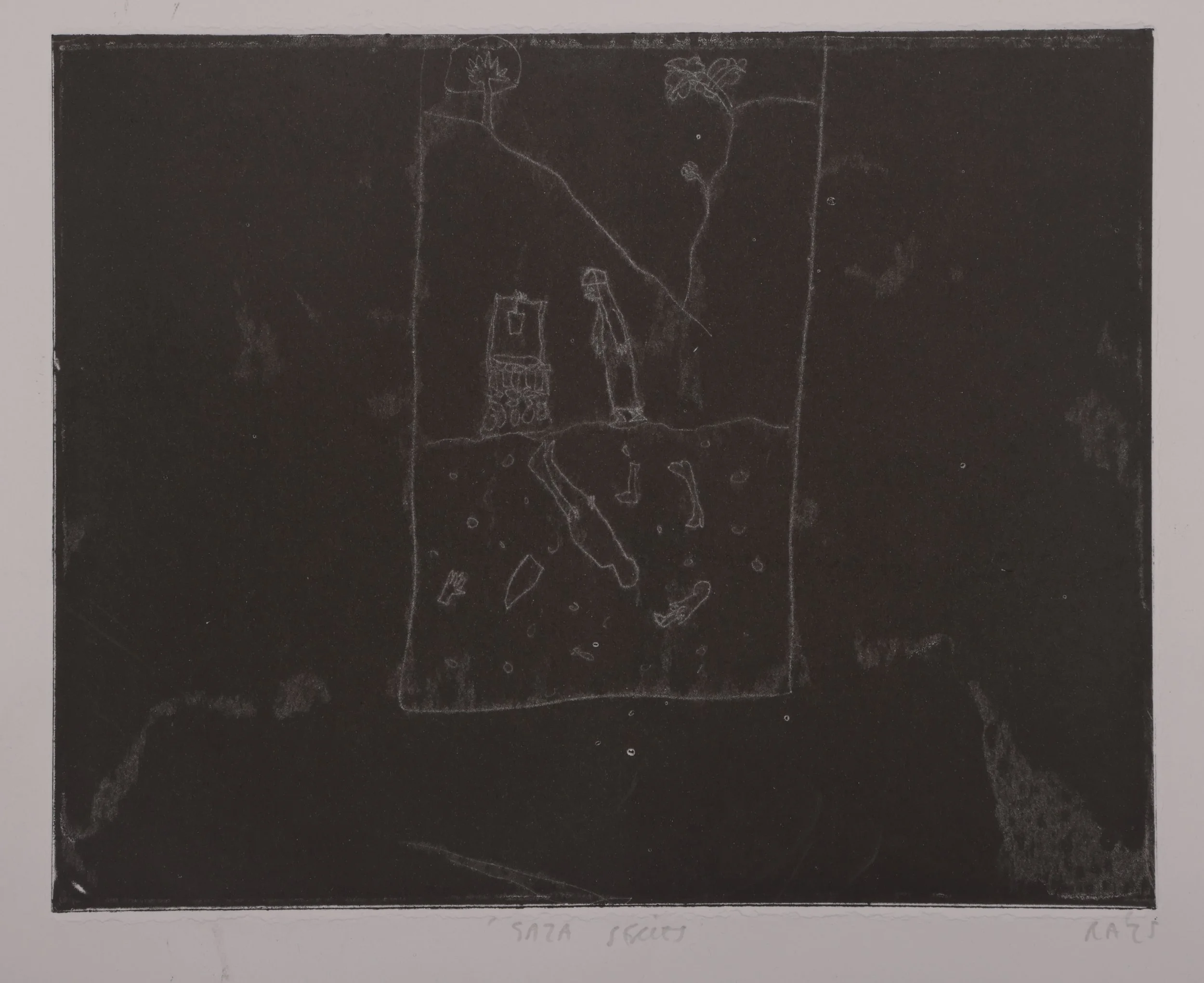
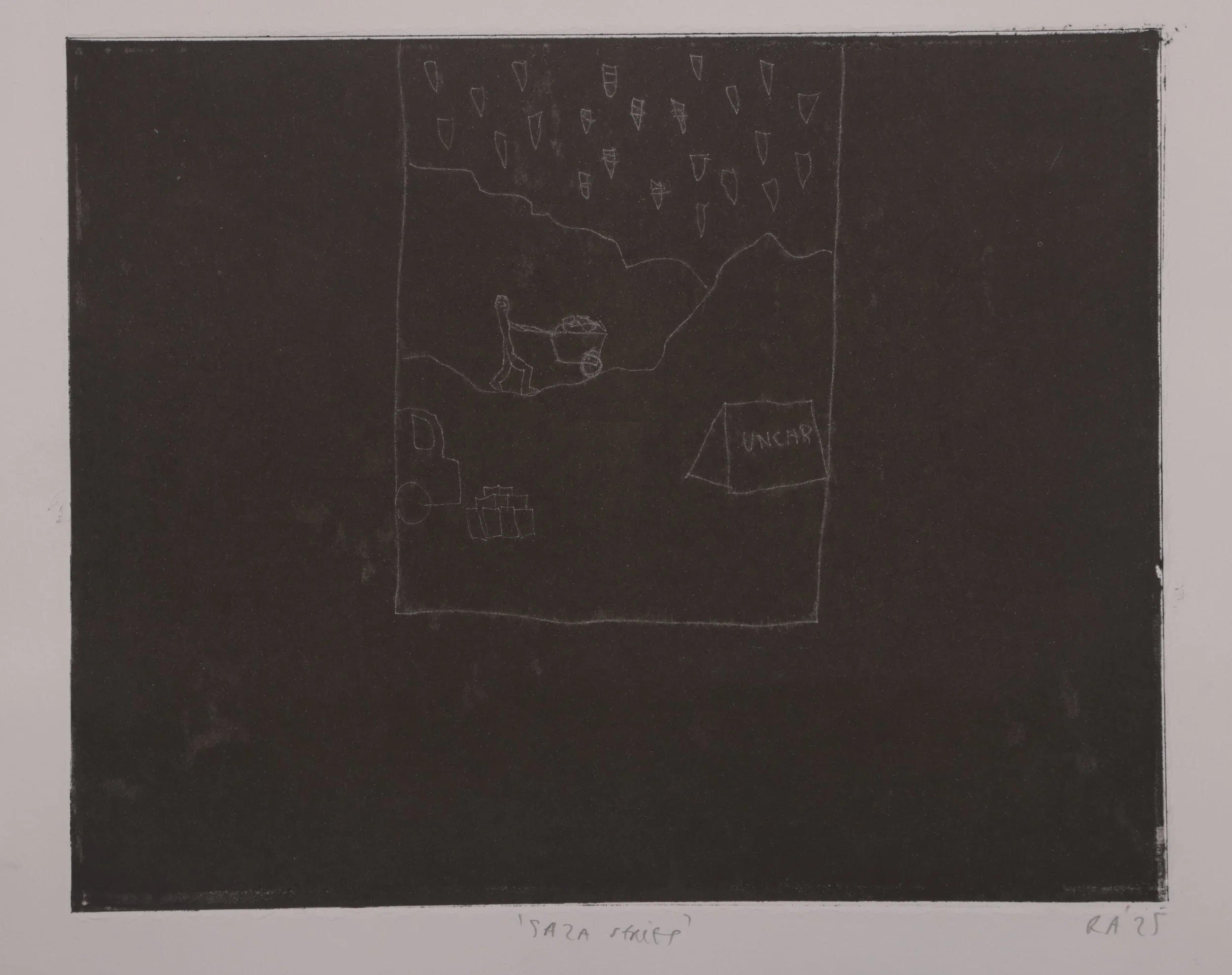
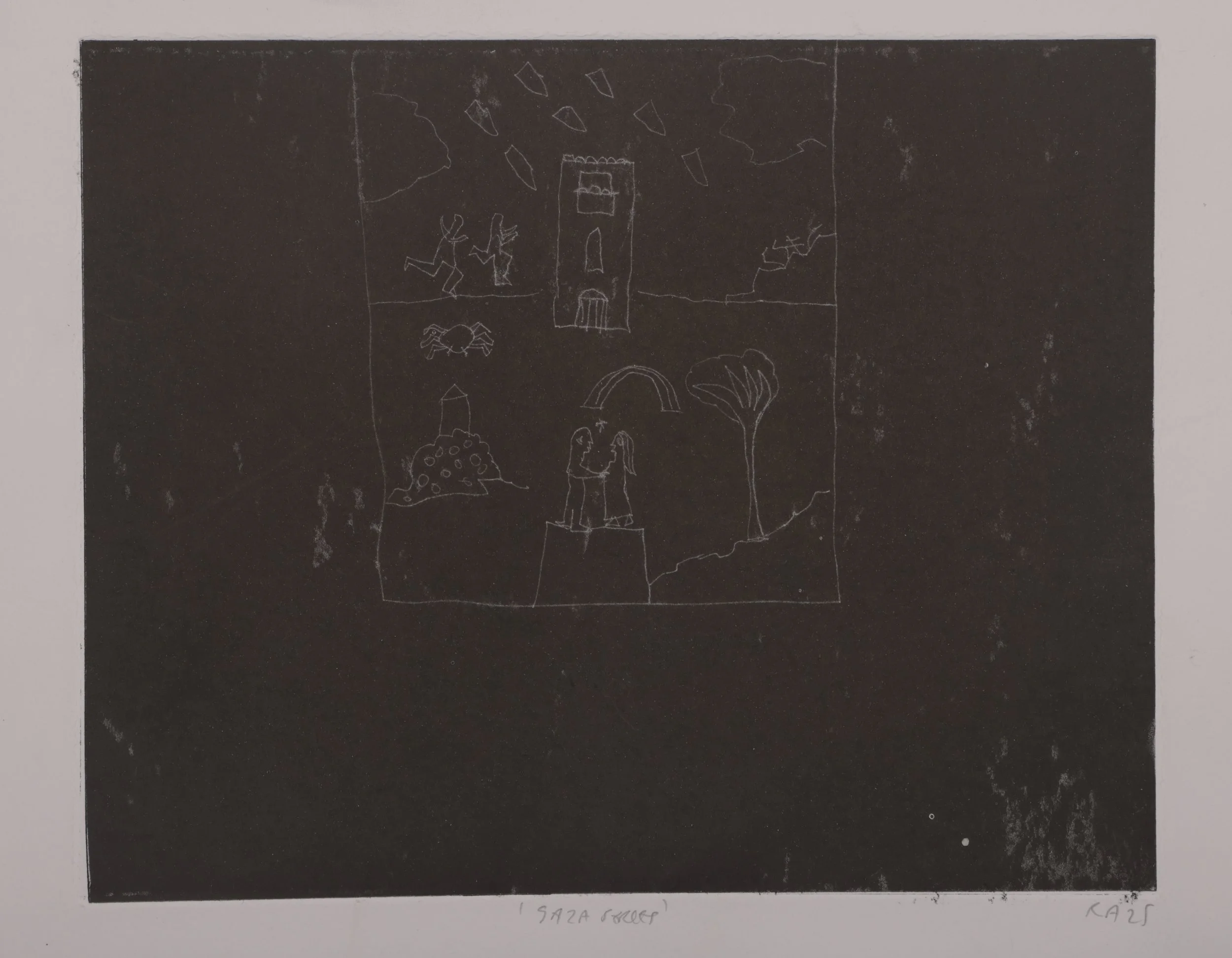
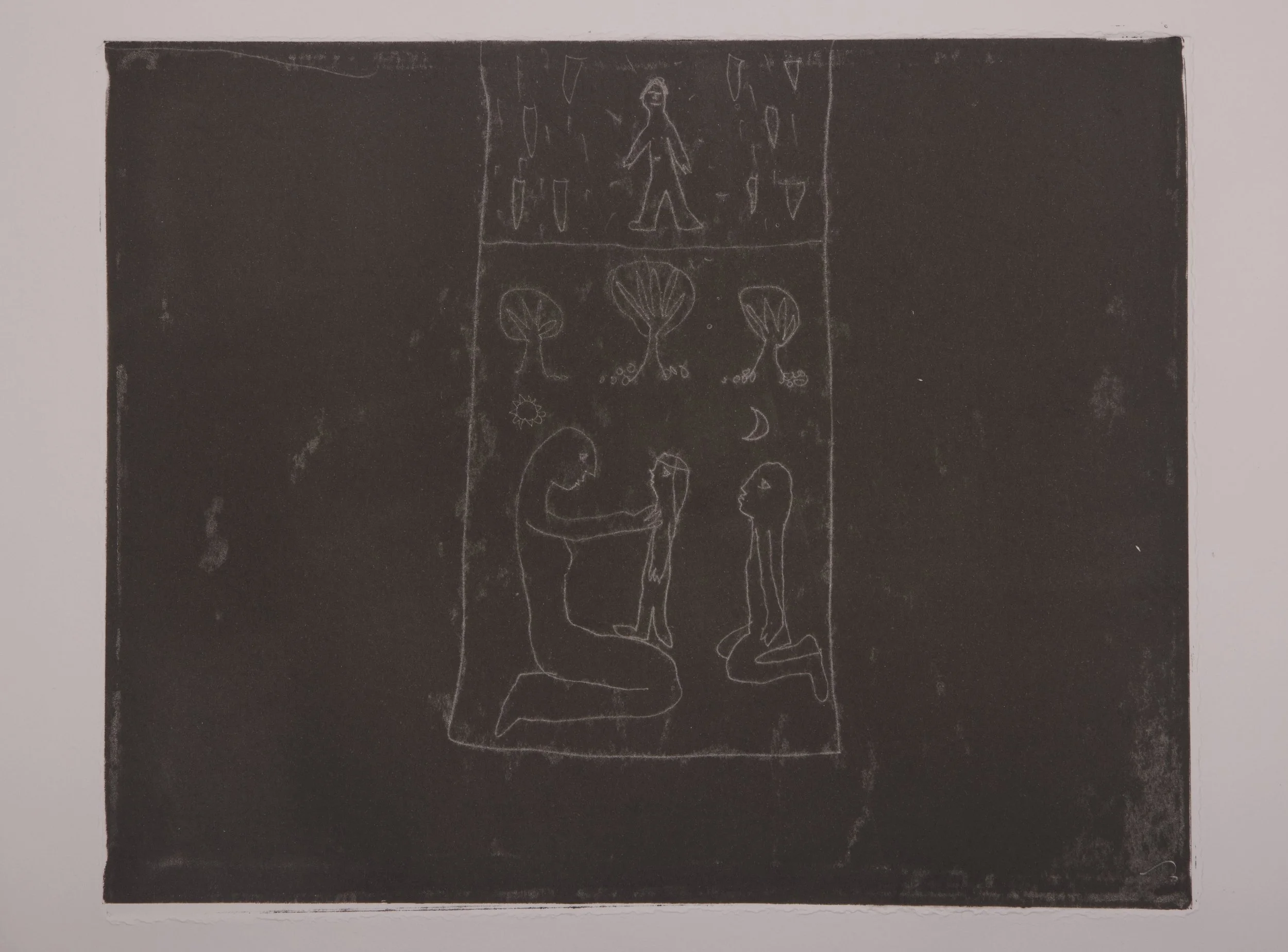
Gaza Series, monotype, 2025
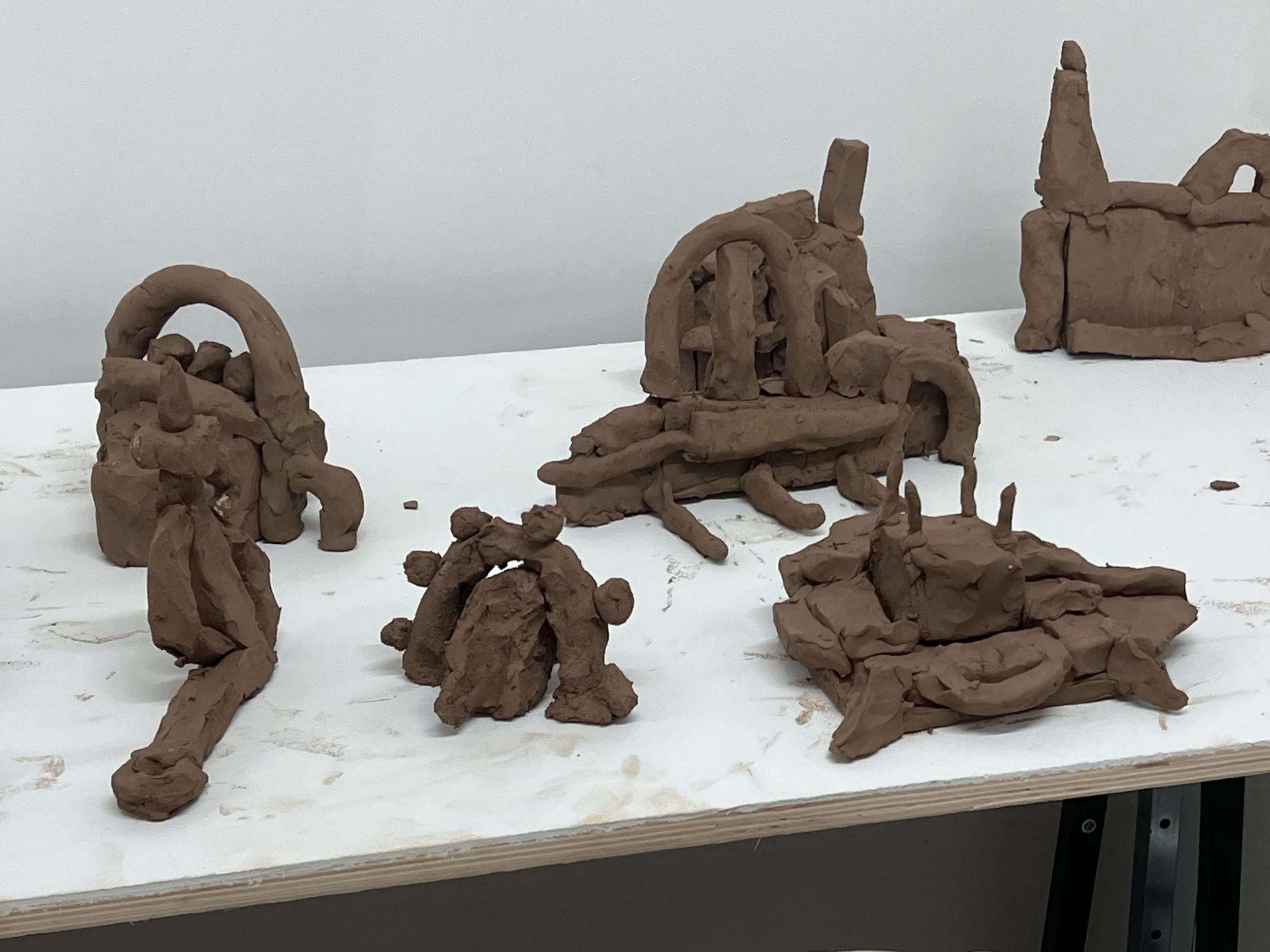
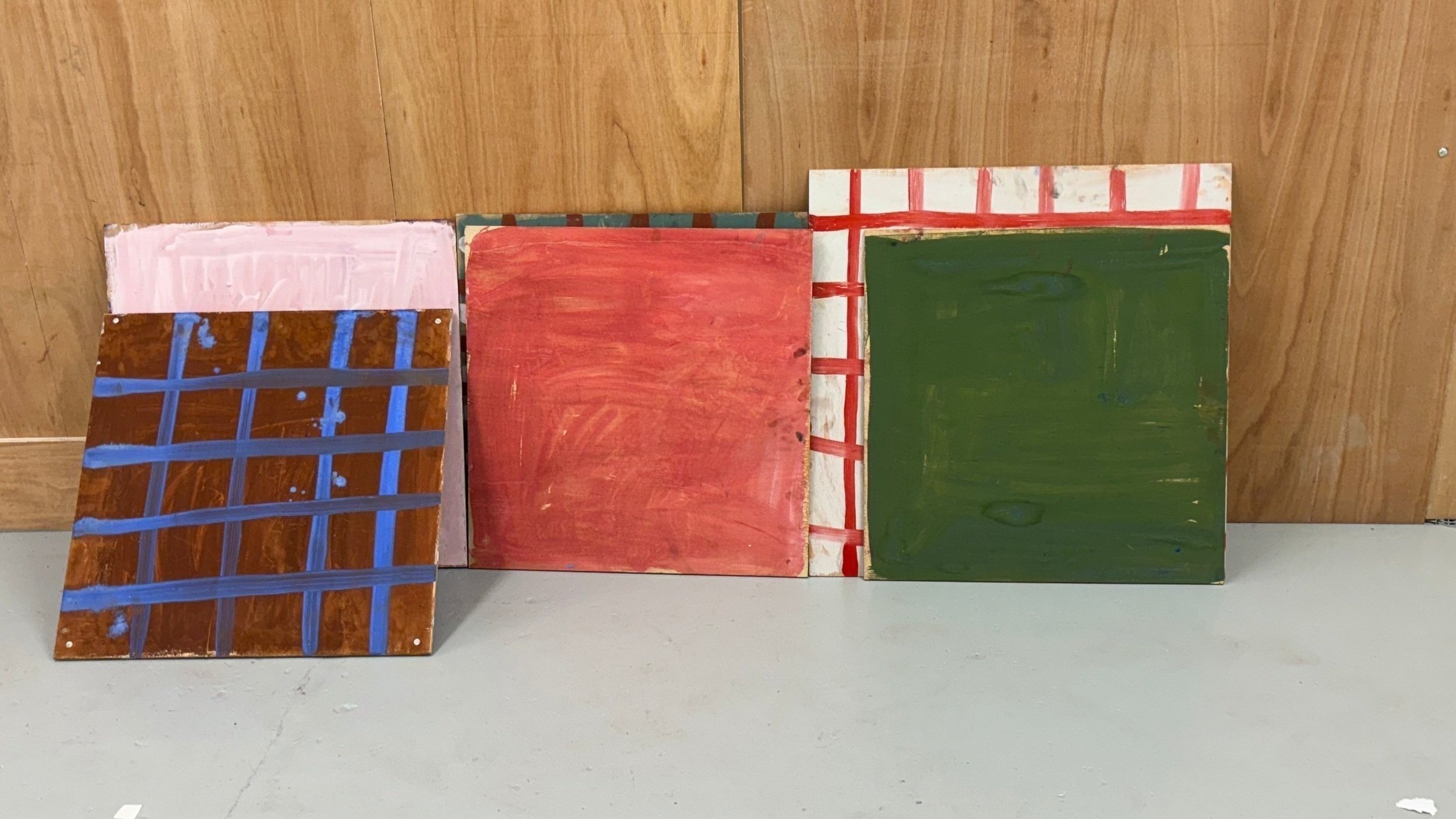
The Dowry, 2024
My practice of painting still life panels demands I reassess the role of modernism in today’s painting
And the place in the history of British painting. Background in abstract expressionism the second layer of modernism which has magnetised so many artists. But appears now often quite flimsy, eg Helen Frankenthaler. The politics of the time elevated this large scale for painting in the 50s and 60s. the scale dwarfed small art, hugely so in Britain. this scale pampered to a few artists, fame became something dreamed about, the dislocation from the land in the US after the persecution of the native Americans meant an existential background for new painting, actually Pollock used Navajo woven rugs as inspiration which in fact was a reconnection to a past they knew not of.
While the St Ives school in the uk , were deeply bedded in the landscape, Britain was often loved for its ‘green and pleasant land’. Their colour was the land and the sea. The paintings are expanding this colour. colour that belongs to the uk, northern Europe, the grandiosity of the abstract expressionists, some kind of minutiae where colour is the index, the subject is only pretend yet gives me a connection to still life painters such as Morandi and Winifred Nicholson. I have many failures and some dreadful car crashes, painting is under rehearsed mostly, and I would like to write about this failure.
There is a whole blood bank of colour histories I have pecked at. From Albers most considered theory to the cultures of clothing and interior design in the wider world, from India to west Africa and Morrocco to the Sahara. Combinations imbed. From beauty to meaning. For instance, turquoise and dark red, in Mongolia. Blue and black- the sea or water in the Dagara tribe in Bukino Faso. To the north, the shades of grey, the subtlety of light in the north. Which is almost oppositional to these examples of south of the equator. Totally differently, Islam in the south is full and subtle with colour, such as in Zanzibar. Women may be covered but not just in black and white. There maybe no representation but what the heck there is so much more expression than that in colour pattern in architecture. And ceramic.
There is something I’m getting at here with the repetition of coloured shapes. Making the application of paint important, something Moroccan artists would understand better than a Brit.
Temperature is also all important, a cool yellow, against a pink that produces a heat like a kiln. That is also bridging cool and hot. This is the mainstay of whats going for this kind of painting. It is an unsung hymn colours in unison treat each other, well or bad, hot or cold, but why is the subject still here??? Some people say it’s because I did it I’m the flotilla in this ocean, but I can’t be having that, that’s a despot. so, I go back to the beginning of time for me which is partly around cubism and early modernism where we go back to how things were made ocularly. The beginning of pixelation, the liberation of colour, the honesty of subject. Though I’m not so honest as Picasso.
Why would I choose this sequence of paintings over the rest of my practice, is it the thing with painting, the way it mystifies, the way it makes allowances, I try and stay close to the application of paint, so that it is always an origin story, and the ending is not present so much, is whimsical. it is partially a tight ship, and an ocean.
Another artist who assimilates me is Craigie Aitcheson whom many a Bedlington terrior is called after, I paint in order to understand painting in all its manifestations. For this I have to leave behind the hype. and go nose first, max wade is the first painter I have bothered with in ages. Before him Per Kirkeby, Matisse but particularly his sculpture. Something about, Guston though he is too mighty, like all Americans , us Brits are dwarfed intellectually, but not without our own superior qualities too. Him in contrapuntal form with Rothko. Who invented painterly materiality, cosmophonics, the problem with subject is a whole seam in western art, think Dekooning.. its almost that each artist has to figure it out for themselves... why is this?
I like hoe it is almost nothing, the low-grade subject humbles the painting. Giving me ‘an origin’ point to Paint against. To make something to different degrees each ‘to feel itself’. Th process is present, you realise that you have to do the building, as the viewer. The preview is the painting process. Which has been filmed; ceases drama; my world doesn’t need any more drama; it is too exhaustive.
So modernism is a chapter, as the last movement I believed in, the post modernism I am still in research, and contemporary is a huge wave to get to grips with… Im not sure if it’s my job... that one.
Bibliography
The loft generartion, edith schloss, 2021
How painting happens, martin Gayford, 2024
After modern art, 1945-2017, David Hopkins, 2018
Investigating modern art, the open university, 1996
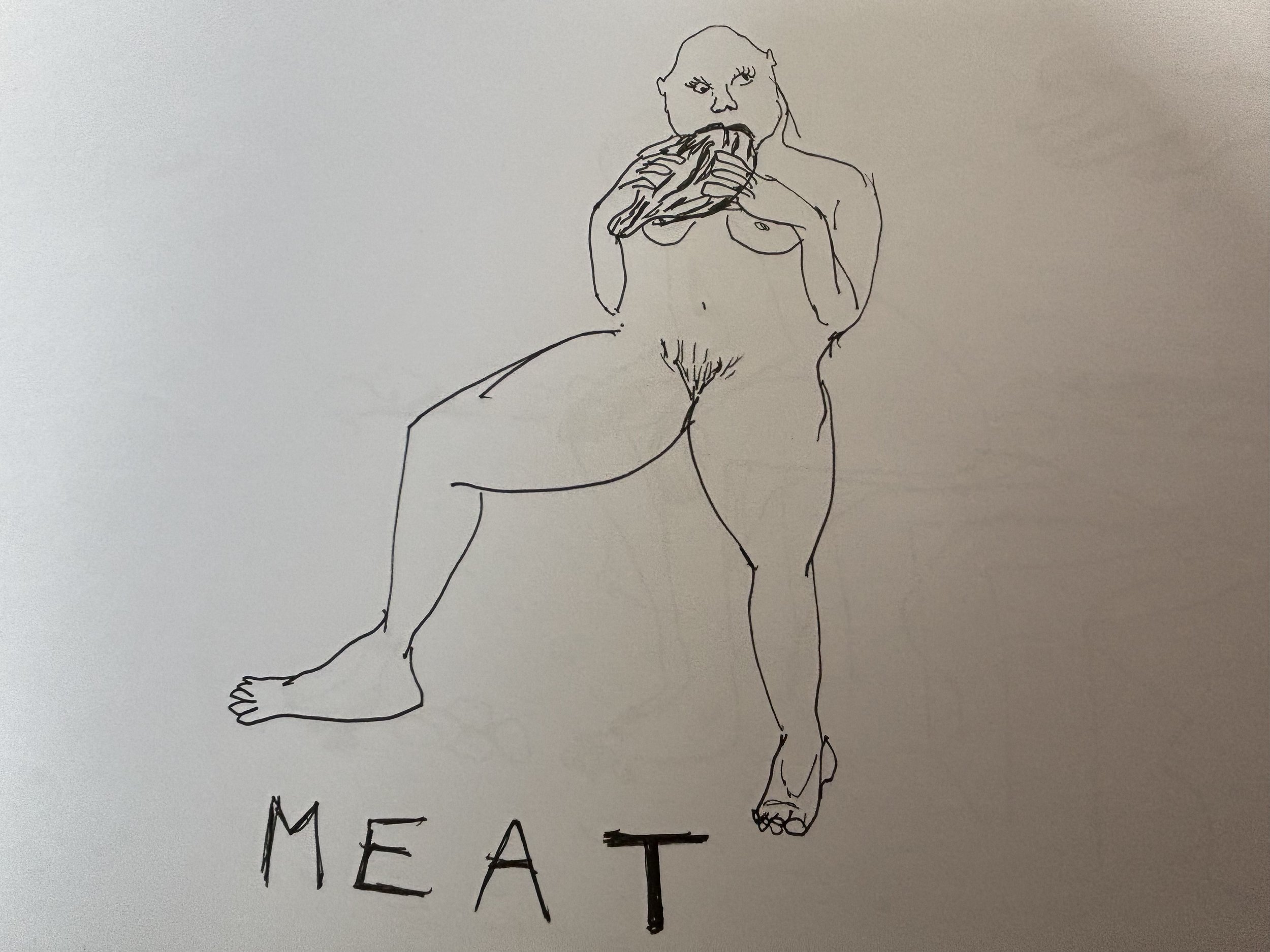
A rough line drawing of a person with short hair, holding a sandwich with both hands and eating it. The person appears to be topless, and the word "MEAT" is written at the bottom of the drawing.
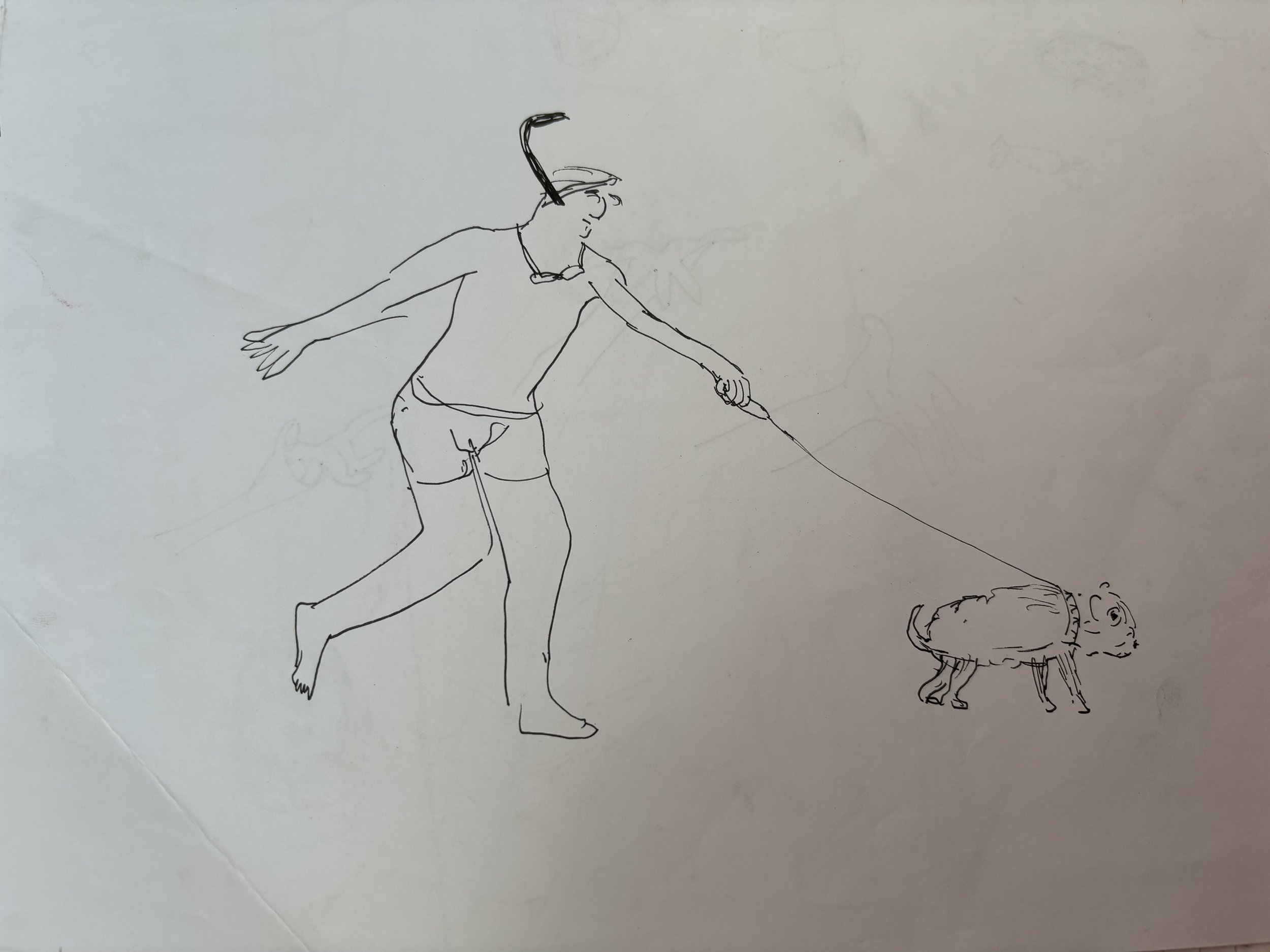
A simple line drawing of a person standing and fishing, with a dog nearby.
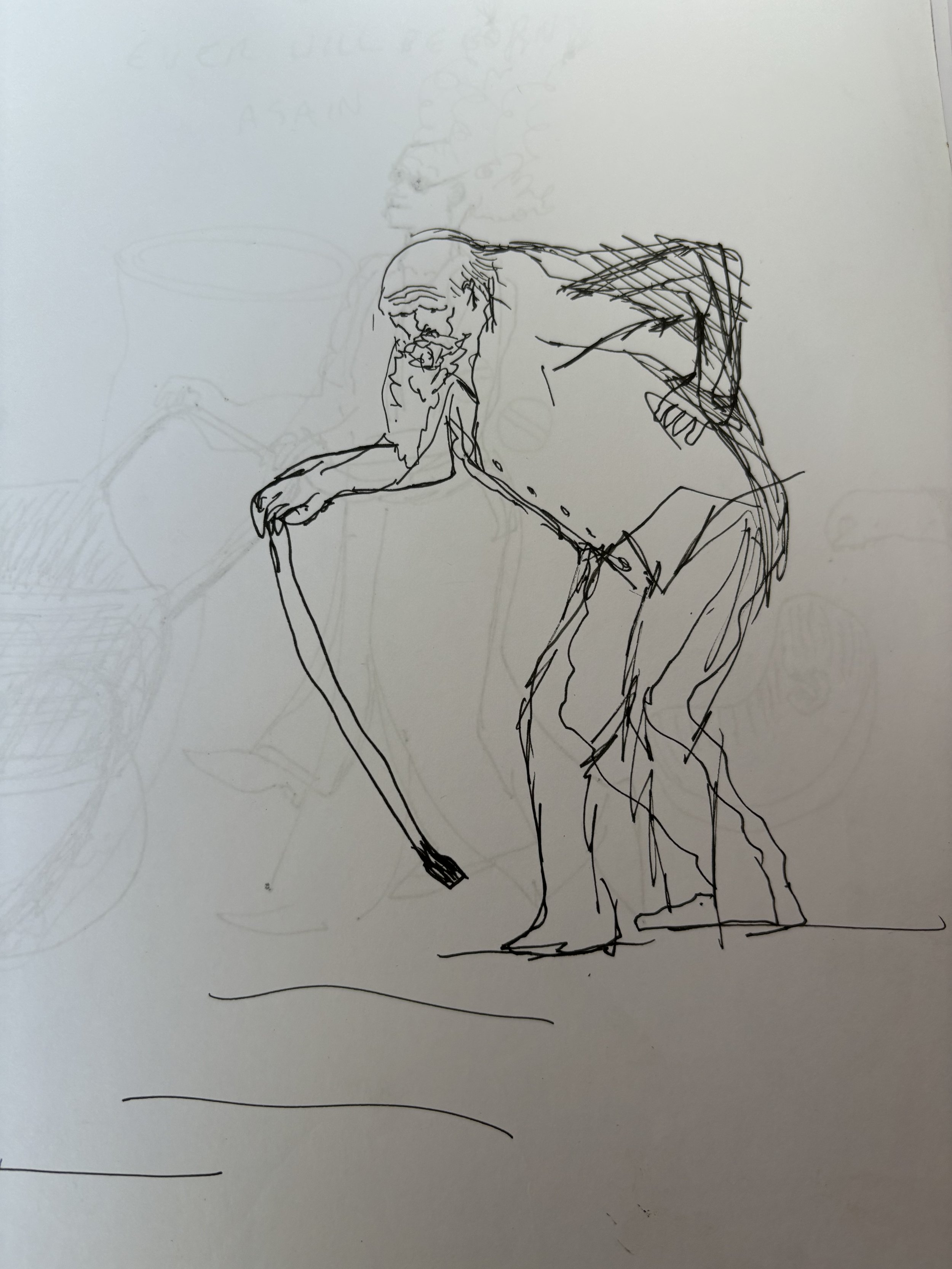
A black line drawing on white paper of an elderly man with a beard, wearing a shirt and pants, leaning on a cane.
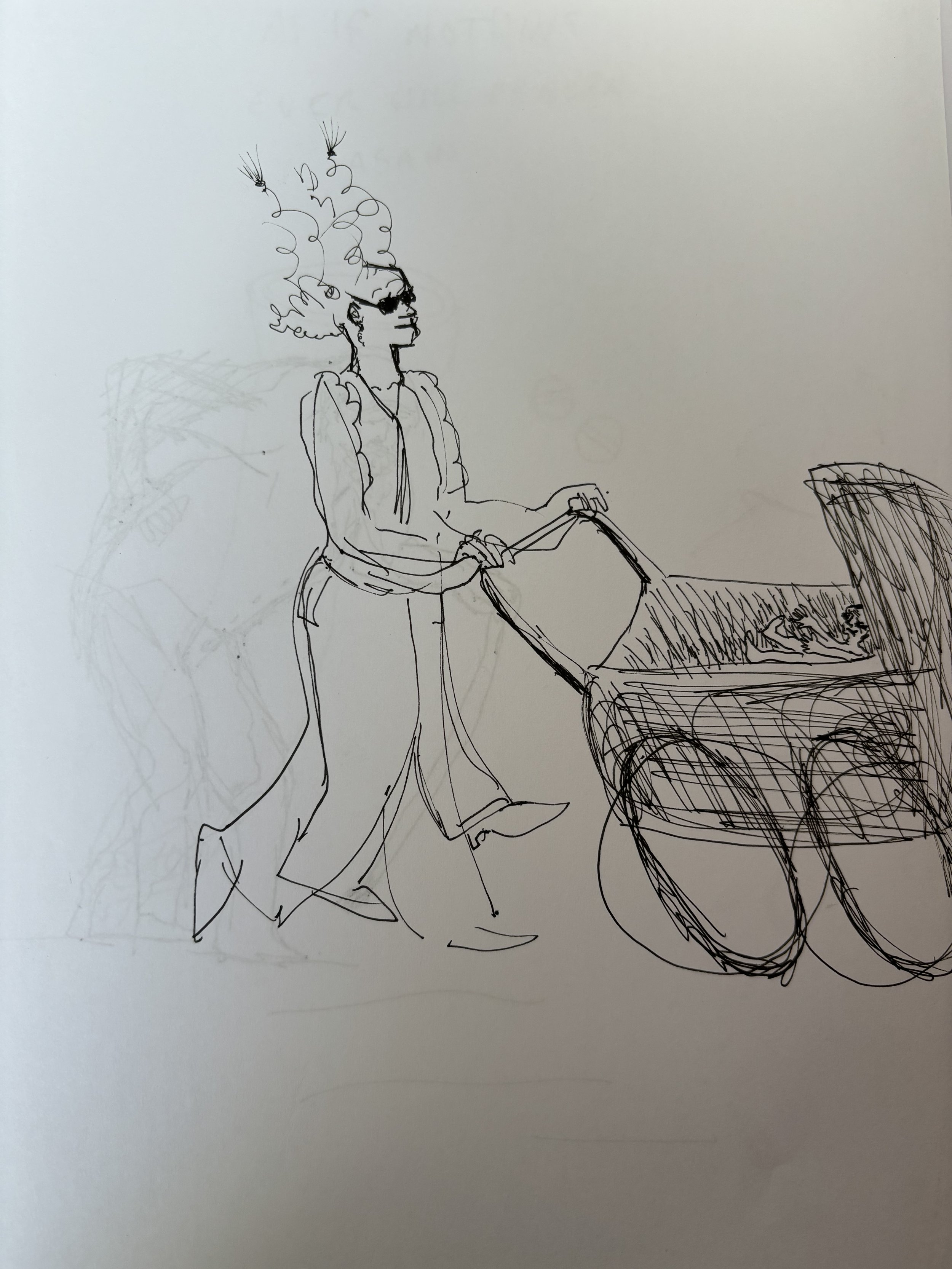
A line drawing of a woman with curly hair wearing sunglasses, pushing a stroller with a person lying inside.
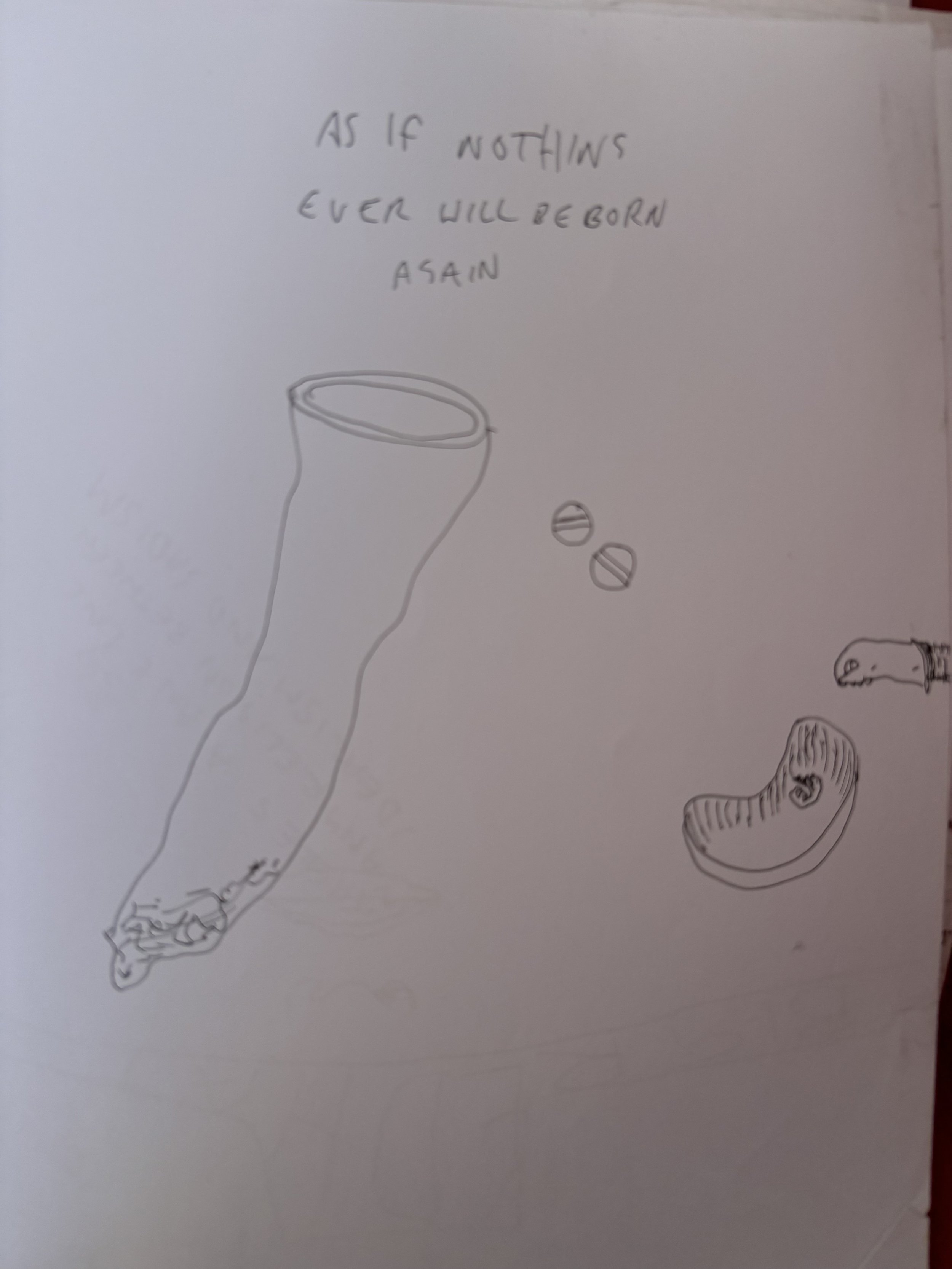
A handwritten note on a white paper with a drawing of a cup, two pills, and a kidney-shaped eraser. The note reads: "As if nothing ever will be born again."
Handwritten note on a white surface with the words 'BISHEDAT' and a curved arrow pointing to a list of words and phrases including 'BISHEDATES,' 'A IN,' 'BENGER,' '10 CALISS,' and 'SANDWICH.'
A simple line drawing of a person lying down on their stomach, with arms extended outward and legs covered with a blanket. There is a peace sign drawn above the figure's head.
A hand-drawn sketch of a person with short hair and an open mouth, wearing a shirt with the words "I AM STILL THINKING" written on it, and gesturing with one hand.
Handwritten notes with a diagram of a house and a drawing of an animal skull, accompanied by text discussing relationships, fun, responsibility, and structure.
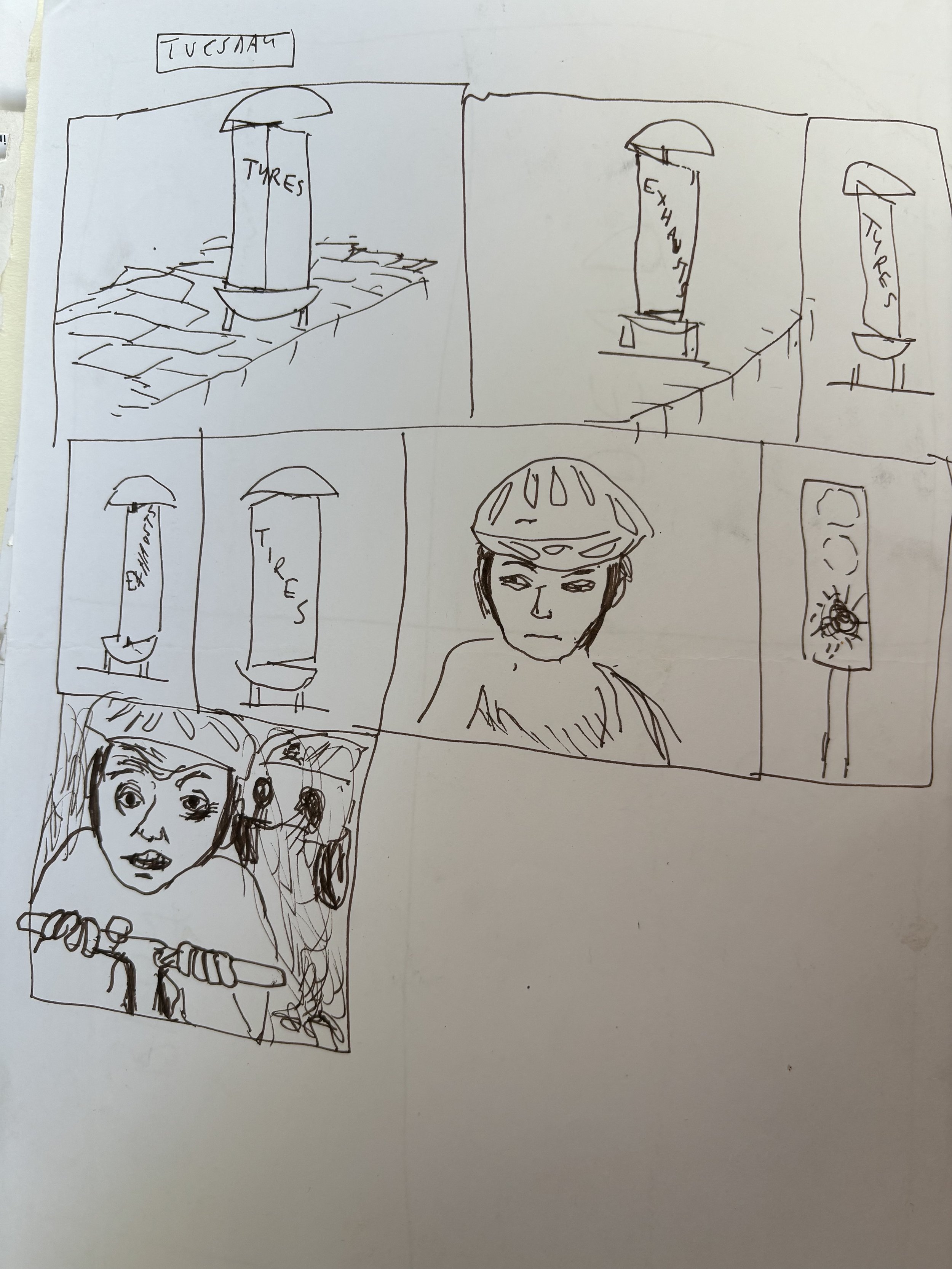
Hand-drawn sketches of various objects and figures on a white sheet of paper, including signs reading 'TUCSON', 'TIRES', and 'EXHAUST', a person wearing a bike helmet, and multiple cartoon-style characters.
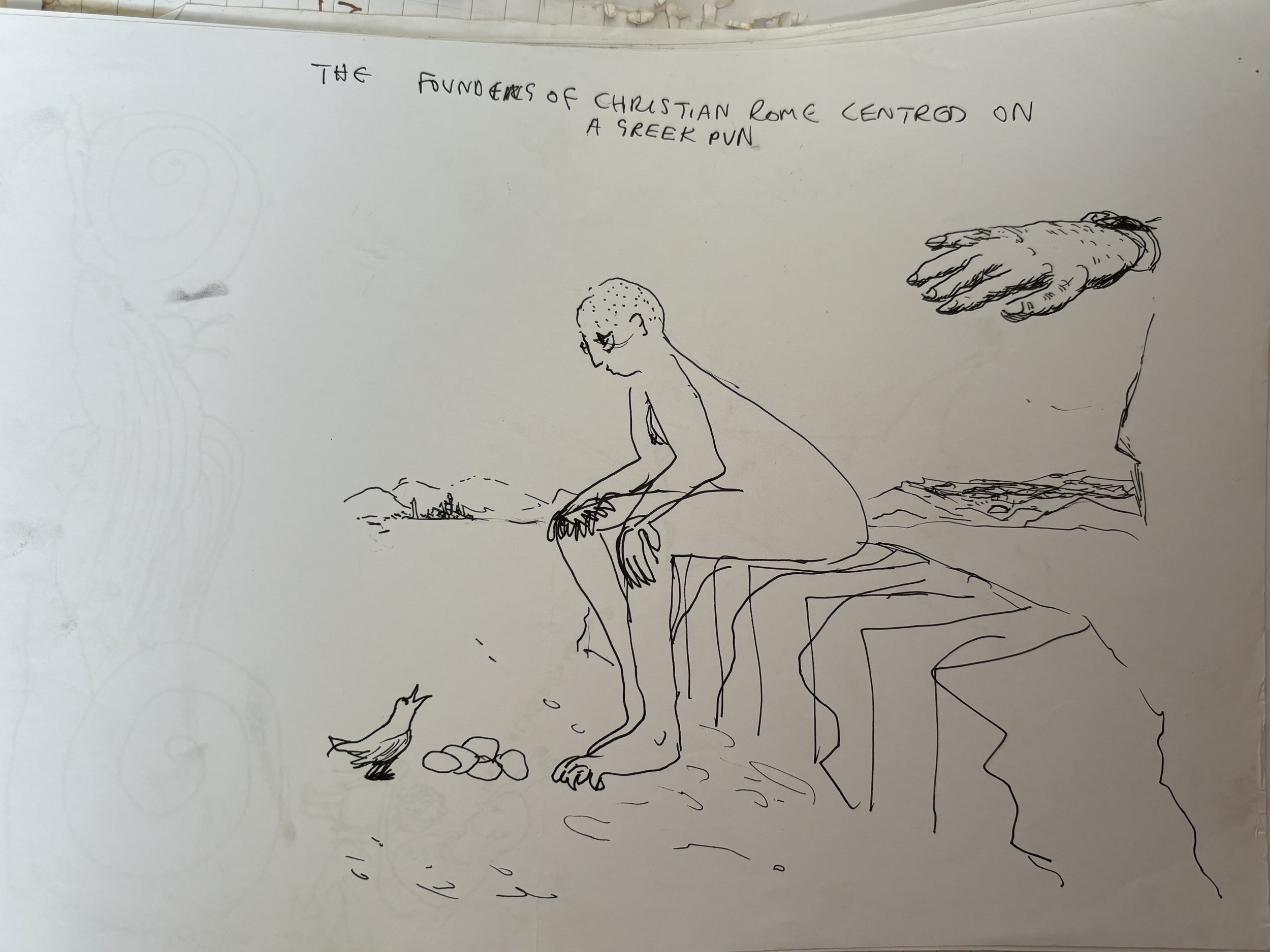
A simple black and white line drawing depicting the biblical scene of the founding of Rome, with a person sitting on a rock, reaching toward a bird on the ground, and a dog nearby, with a landscape in the background.
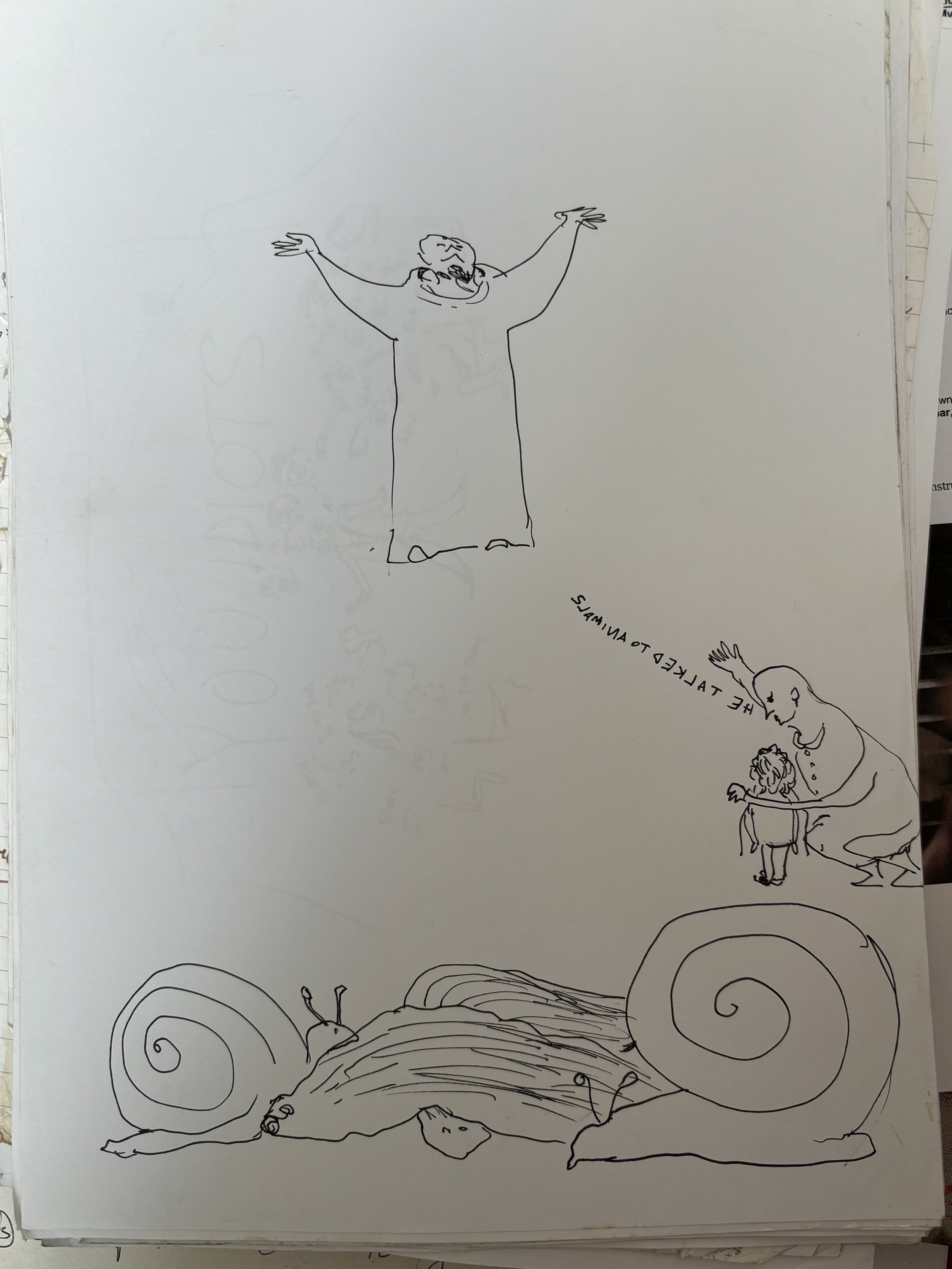
A simple line drawing depicting a person standing with arms raised, singing or shouting, and a snail with large spiraled shell and extended antennae on the ground near the person's feet, with text that reads 'HE TALKED TO ANYWAY.'
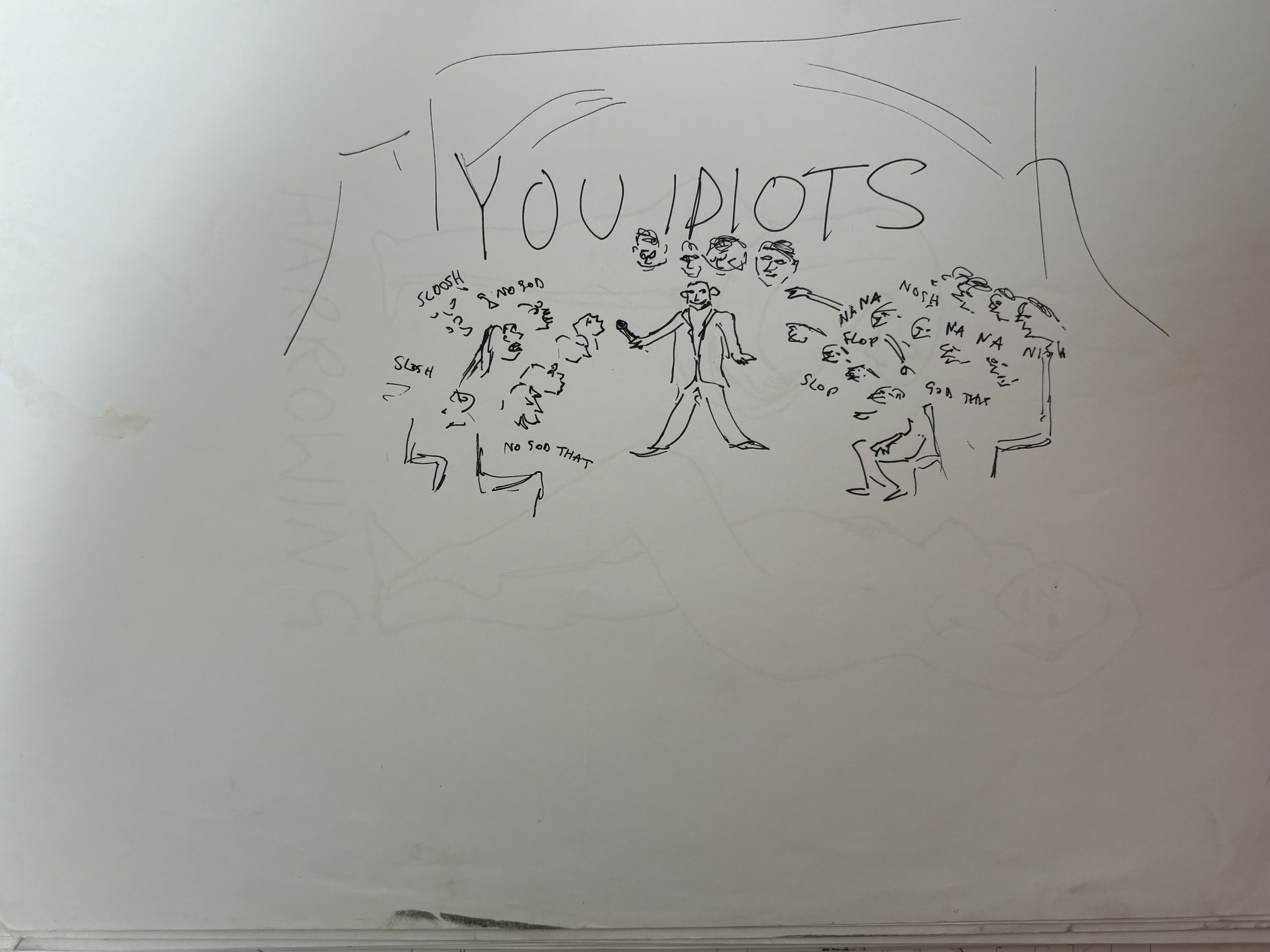
A whiteboard with the phrase 'You Idiots' written in large letters. Hand-drawn cartoon-style characters are around the words, some with speech bubbles and some with gestures, illustrating a humorous or chaotic scene.

Line drawing of a woman with short hair standing with her hands on her hips and a boy with a hat bending forward and reaching toward her, with the words 'HAPPY HARROWING' written underneath.
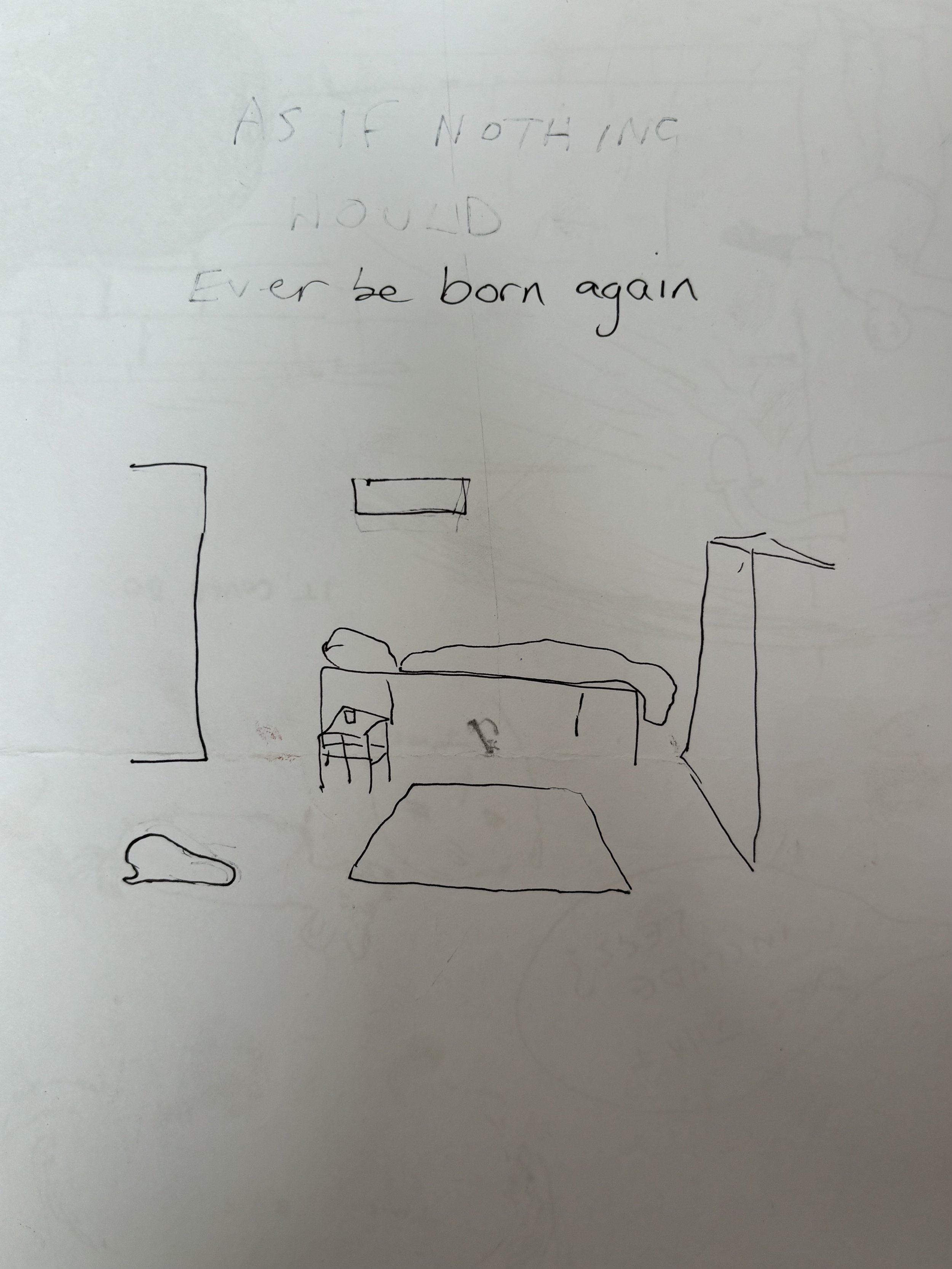
A hand-drawn sketch of a bedroom with a bed, a rug, a side table, and a bookshelf, along with handwritten text that says, 'As if nothing would ever be born again.'
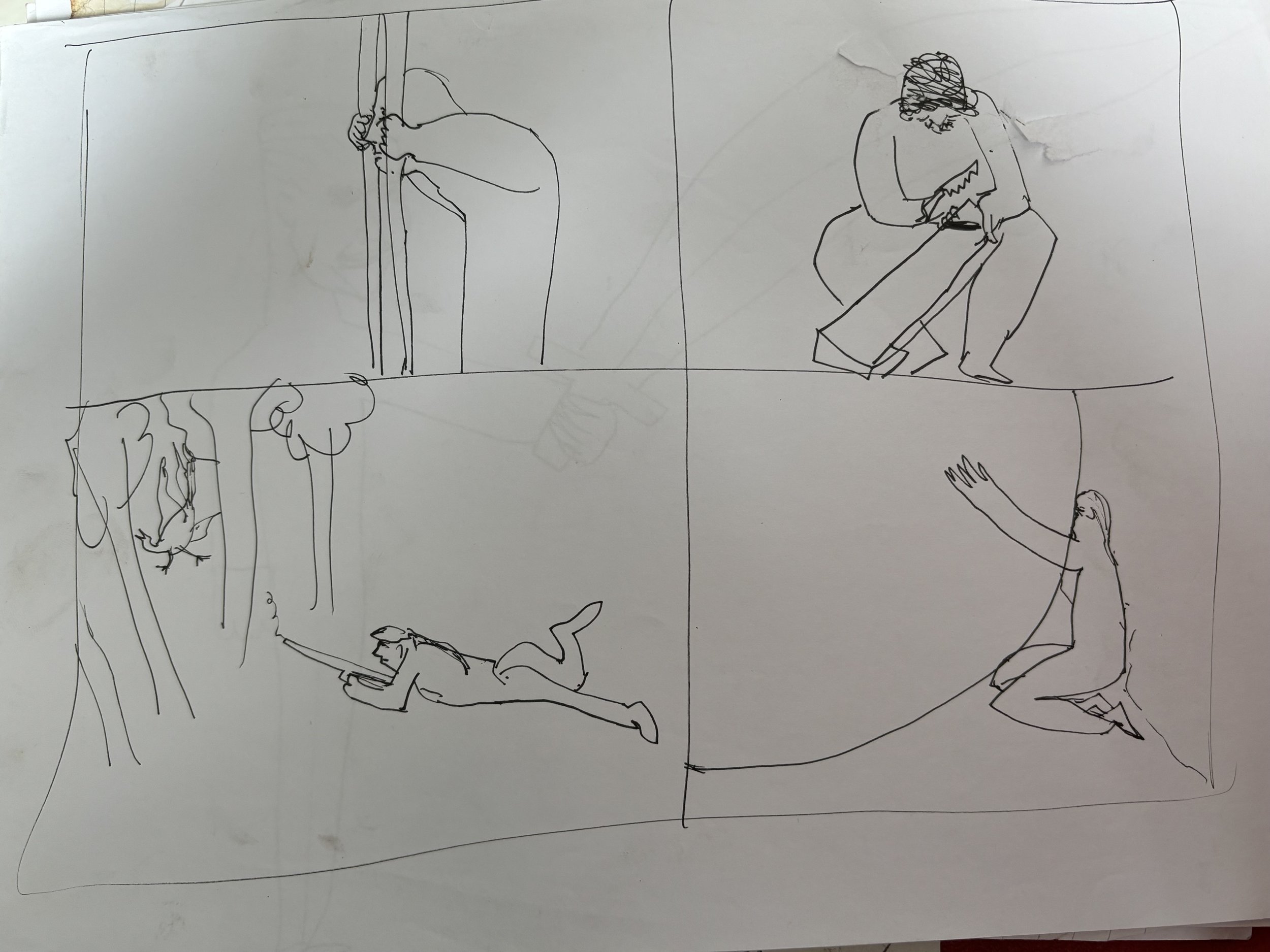
A paper with four comic-style sketches of people in different scenes. The first scene shows a person with a ponytail looking out a window. The second scene depicts a woman with curly hair sitting on a bench, holding a book or notebook. The third scene shows a person lying on the ground, working on something, with trees and clouds in the background. The fourth scene features a person reaching up or pointing towards something.
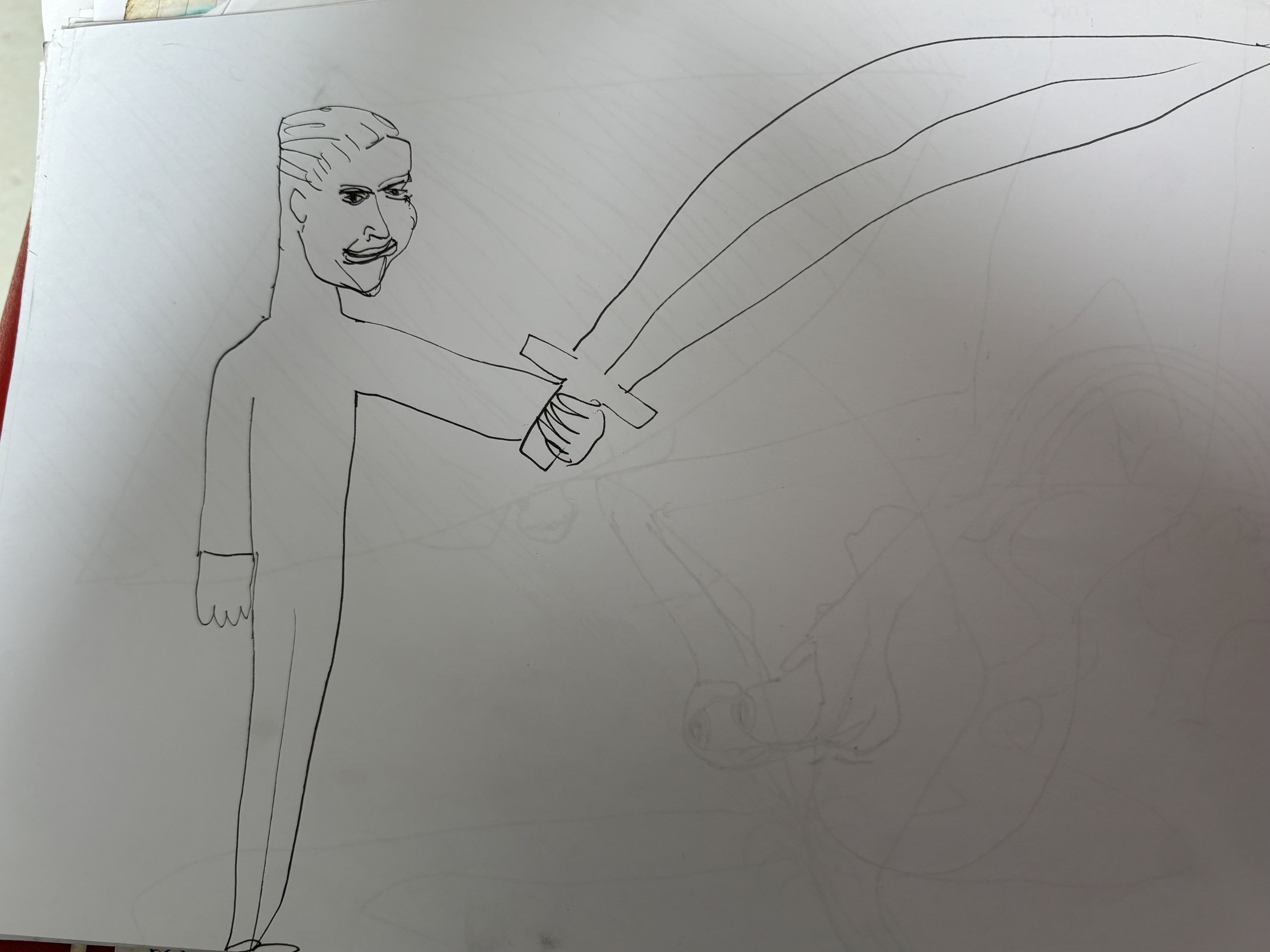
A hand-drawn sketch of a woman with long hair, smiling, holding an object that appears to be a cross, with rainbow-like lines emanating from it. The sketch is on white paper.
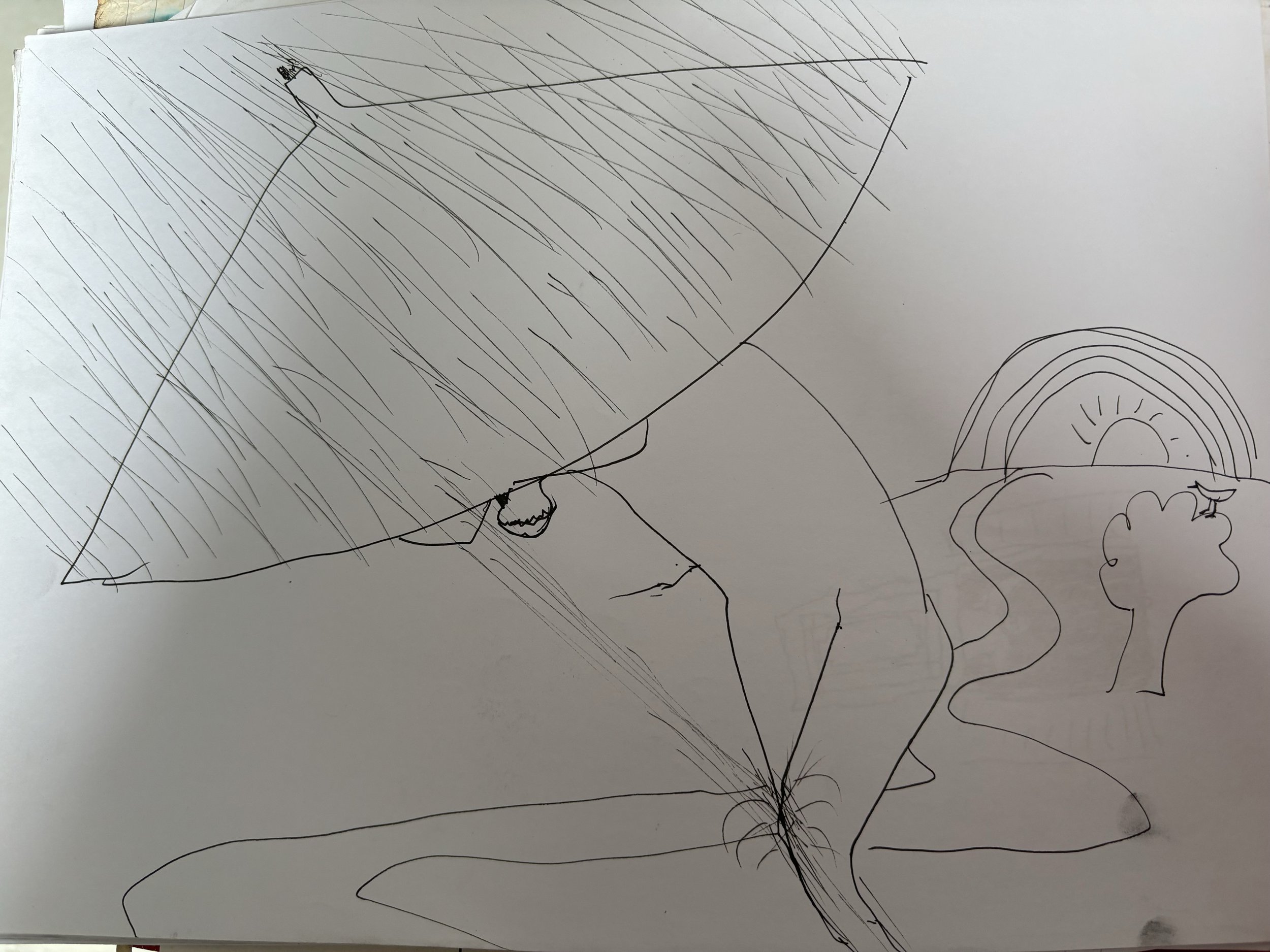
A child's drawing featuring a house, a rainbow, and a smiling face on the right side, all drawn with black ink on white paper.
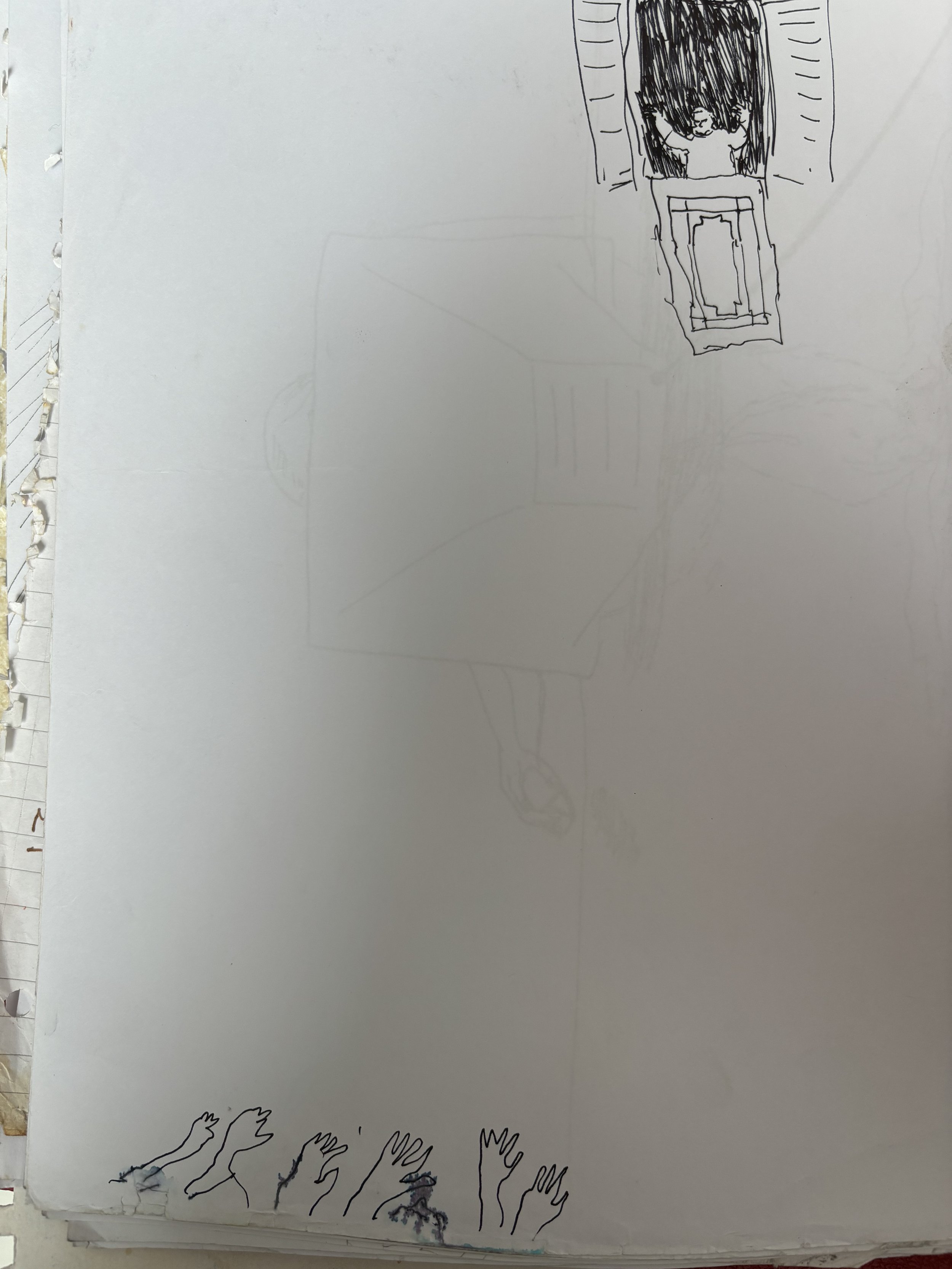
A drawing on a white sheet of paper, with a dark shaded person at the top and multiple outlines of hands at the bottom, some appearing to reach or wave.
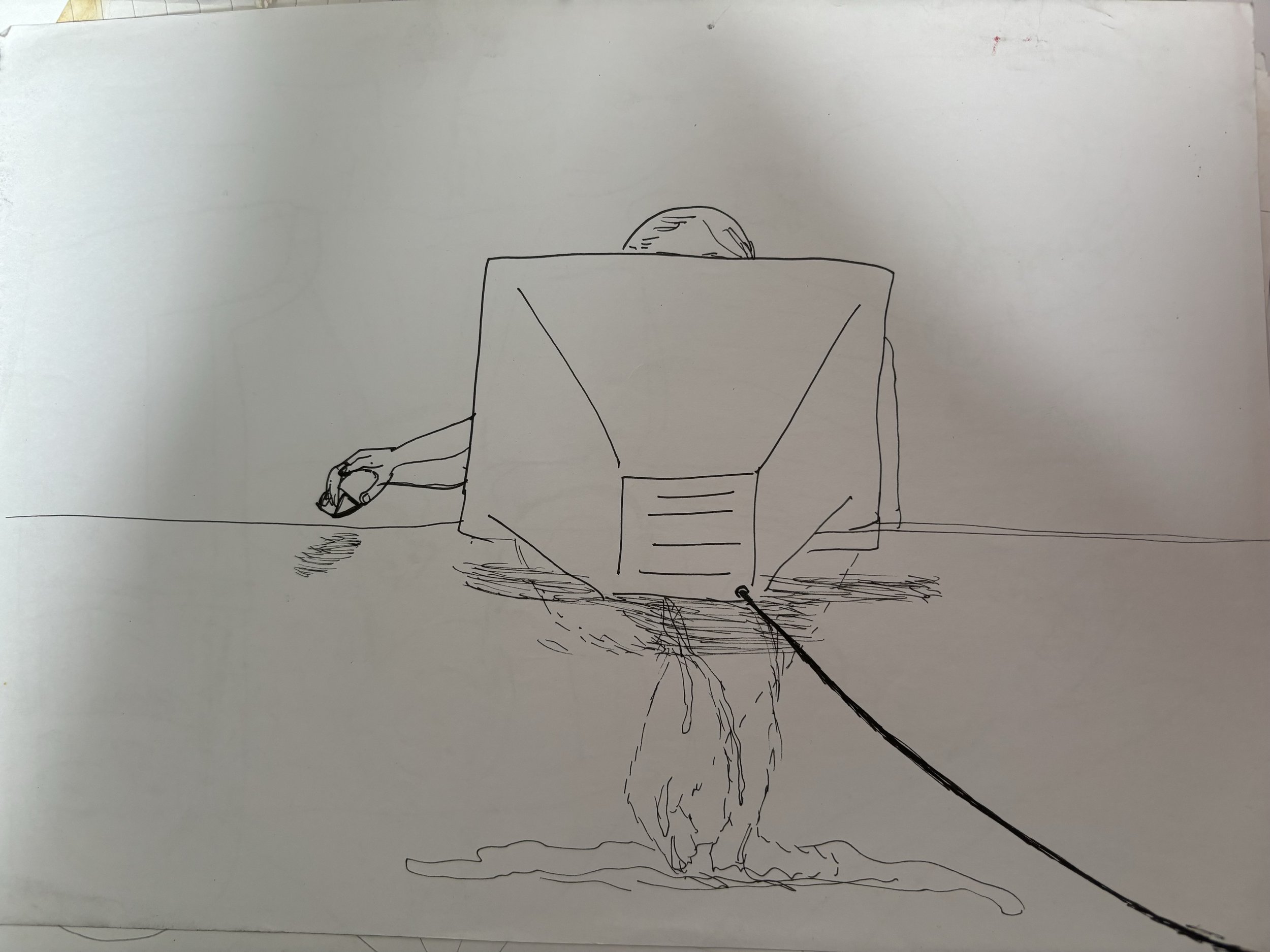
Line drawing of a person sitting at a desk with a computer monitor, holding a mouse in their right hand, with a plant or object on the floor nearby.
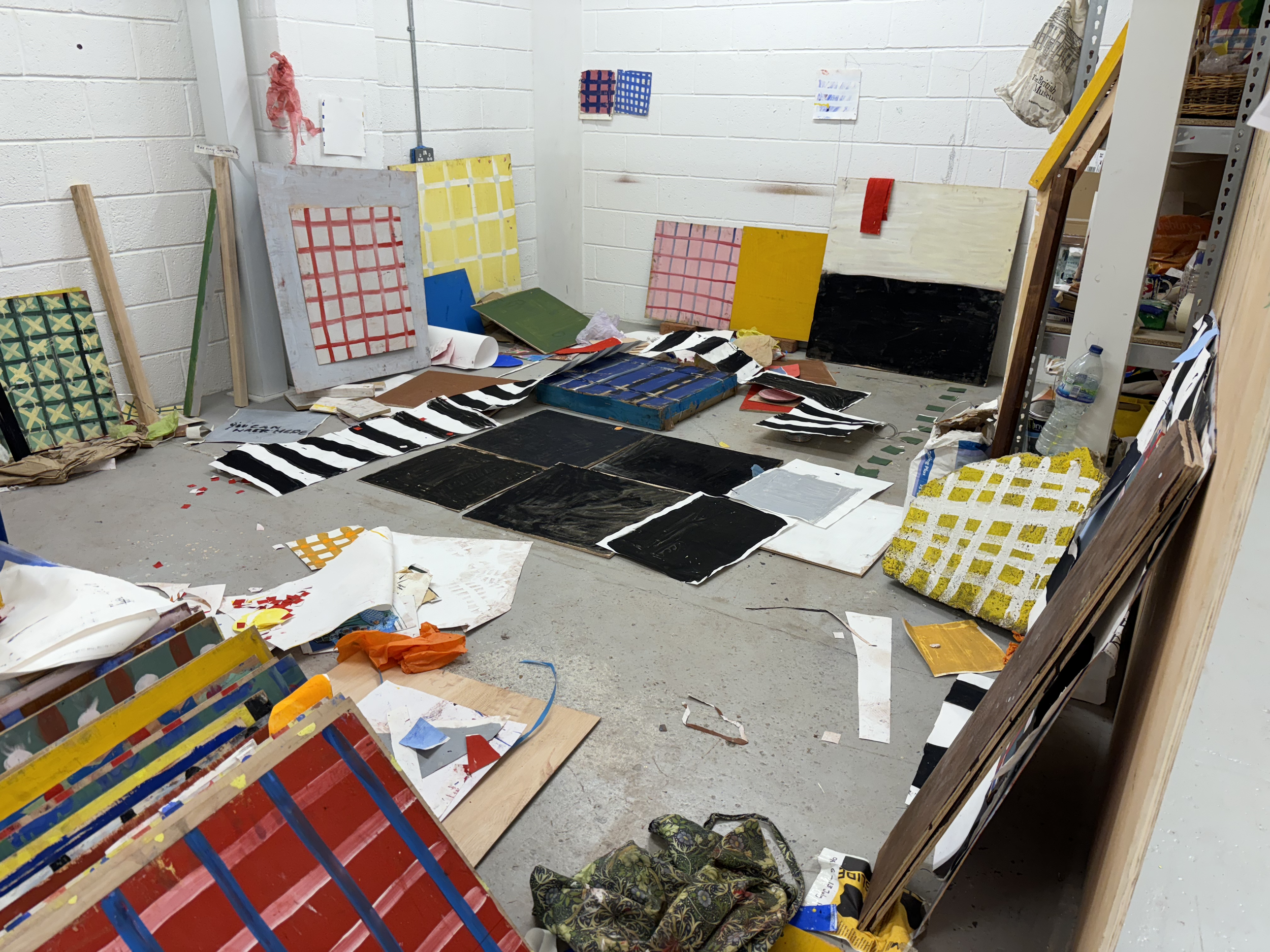
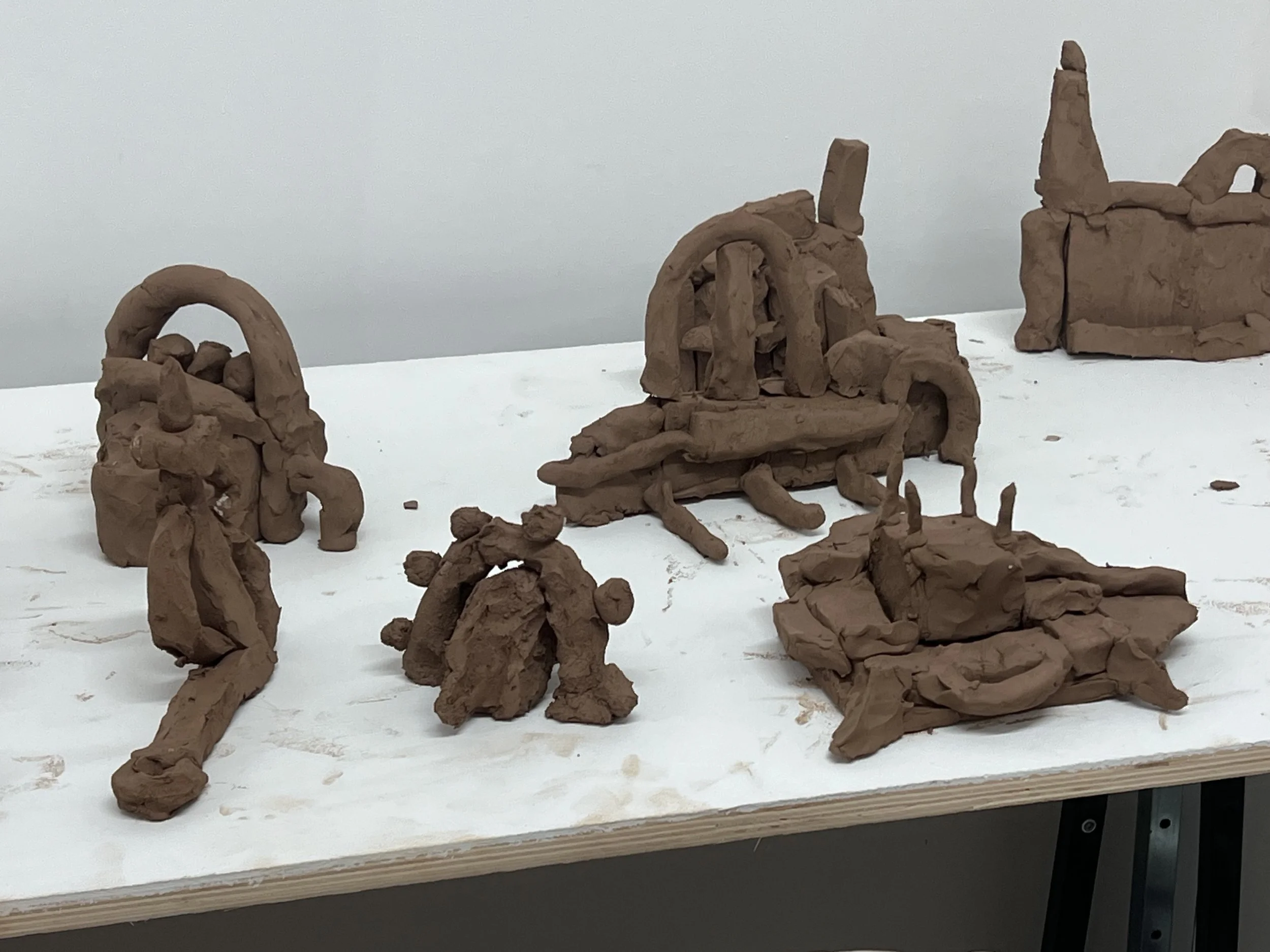
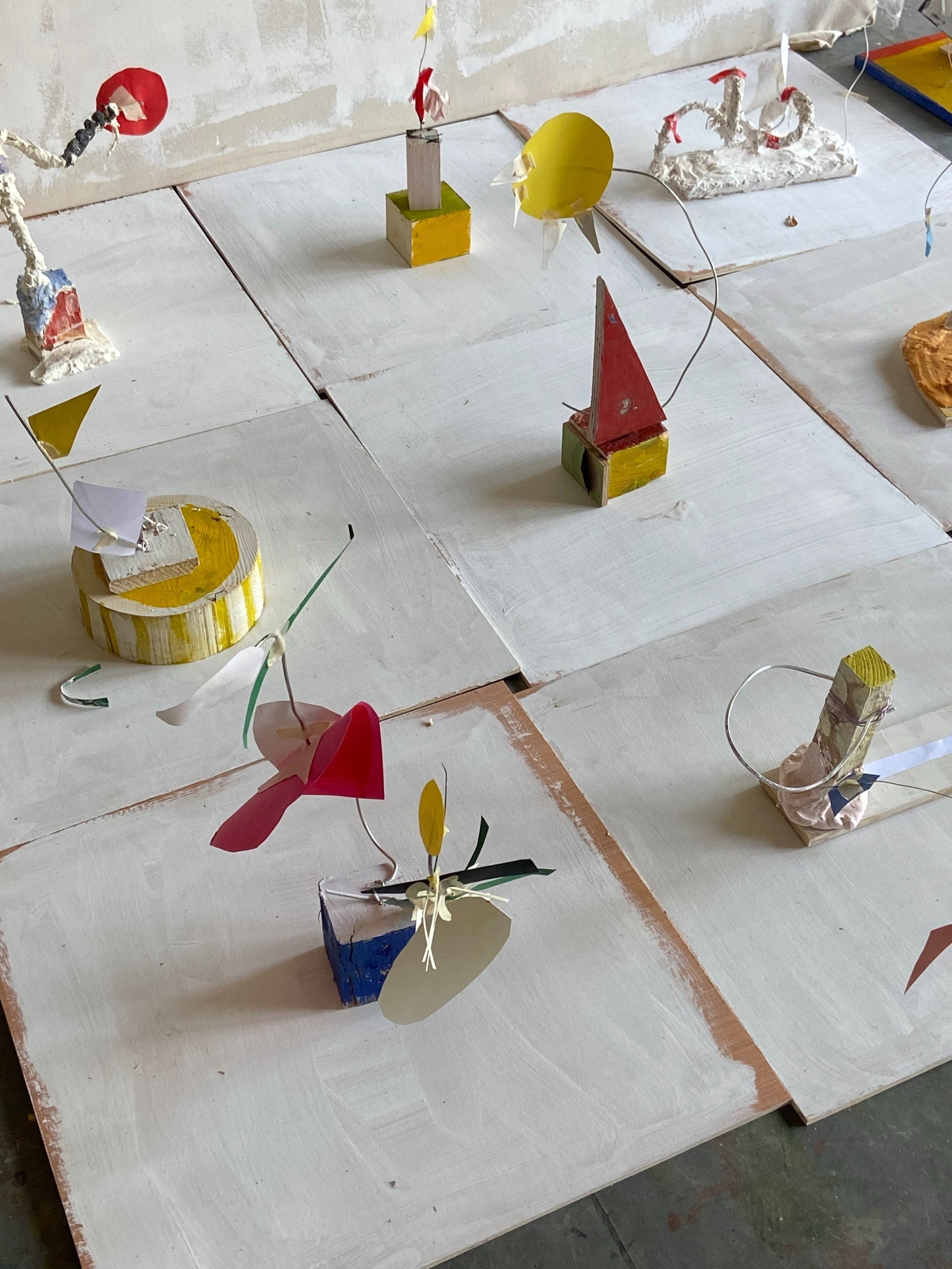
Studio shot, Nov 2024